
Dust, mud, noise and disruption, HGV convoys, broken promises and cracks in the walls of local houses.
The local community is still reeling from the construction of the Cleve Hill solar plant in Kent. But after two years of what was described by a local as a “nightmare” build programme at the UK’s first – and currently only – ‘NSIP’ solar facility to be constructed, locals say that there is still no sign of the landscape planting the developer was required to fund and deliver as part of its Development Consent Order. None of the agreed community ‘benefits’ have been delivered, and the promised biodiversity ‘improvements’ have not materialised either. In the PR for the scheme, the original developer promoted Cleve Hill’s ability to provide clean power to local homes. The output is instead sold under Power Purchase Agreements for Tesco and Shell.
A community battling problem after problem
Residents living close to the building site had to deal with problem after problem, from flooding, through illegally closed footpaths, to “soul destroying” noise when the builders switched to a different pile-driving technique for the extensive foundations to support racking for the 600,000 solar panels.
12-hour construction days
The construction process was relentless. Very long working hours saw workers on site 7am to 7pm every weekday and 7am to 2pm on Saturdays.
Lut Stewart, a resident in the nearby village of Graveney, says:
“The constant thud, thud of pile-driving from early in the morning and into the evening, drove us all mad. It was so intrusive that even when it stopped we felt we could hear it still, it had become so much a part of our world. It’s a continuous low level noise that gets to you and can give you headache after headache. It’s a constant reminder of what is being destroyed.”
Construction project dominated community for two years
Pile-driving wasn’t the only noise: there was continuous drilling, equipment reverse alerts, and metallic noises from fitting the panels. On top of this, the noise and disruption that comes with the territory when hundreds of construction workers “take over” the area for two long years. Site workers came from all over Europe.
The hundreds of thousands of panels are almost 4 metres high. Cleve Hill is configured in an east-west design, so the racked panels create a dark, almost continuous apex roof pattern across the 900-acre site.
Constant HGV traffic on small rural roads
The construction traffic was a major issue for local residents. Lut talks about “thundering of lorries going past” and houses literally “shaking”. Cracks have appeared in buildings on the HGV route.
The construction traffic was so heavy at this rural location that the developer had to use a so-called ‘Golden hours’ system. Each day, for one hour in the morning, and one hour in the afternoon, construction traffic was stopped. These brief respite times were so that children could start and finish school safely and local people could use their narrow country roads free of the HGV traffic needed to build the UK’s first mega solar power plant.
Lut describes the impact of constant HGV traffic:
“The road through the village is a rural road and the continuous HGV movements made it look as if a bomb had hit it. The verges were decimated, loads of mud, hollows, potholes. We had regular roadworks because of the gas and water leaks. These were rare before the development started but they became a regular occurrence – the developer said it had nothing to do with them, but we were getting regular convoys of up to six HGVs on a small rural road. We had steady streams of concrete mixer lorries.”
Local drivers battled construction convoys
According to Lut, local drivers found themselves pushed into the verge and hedges, damaging their cars, because they were faced with a convoy of HGVs after the escort vehicle repeatedly gave the warning too late.
The developer ended up having to build a large marshalling area to streamline the flow of HGVs and prevent so many disruptive and dangerous convoys.
Hundreds of site workers – but a Greek construction contractor
The long construction project did not even bring local job opportunities – a Greek construction company won the £114 million contract. Cleve Hill is subsidised by a government-backed Contract for Difference.
Community still struggling with impact on a ‘unique landscape’
Locals, says Lut, still feel powerless:
“Many people feel that everything has been taken from them: nature, wildlife, birds – all the owls, geese, marsh harriers, kites which so abounded appear to have largely disappeared – recreational space, productive land, culture, heritage, the whole of the marshes and its unique landscape, peace and quiet.”
The solar arrays at Cleve Hill started operating this summer. But construction work is still going on, now to install the compound to house the 150MW battery energy storage system – 96 container-sized units filled with thousands of lithium-ion cells. Battery banks like this are still not regulated in the UK, even though they come with serious explosion and fire risks caused by thermal runaway.
| East Park Energy – more than double the site size of Cleve Hill 400MW • 1,900 acres • 100MW lithium-ion battery compound consisting of 120 container units • 3-year construction programme • construction traffic system planned for B645 and sections of B and C roads in and around local villages • ‘rat run’ traffic anticipated on local road networks |
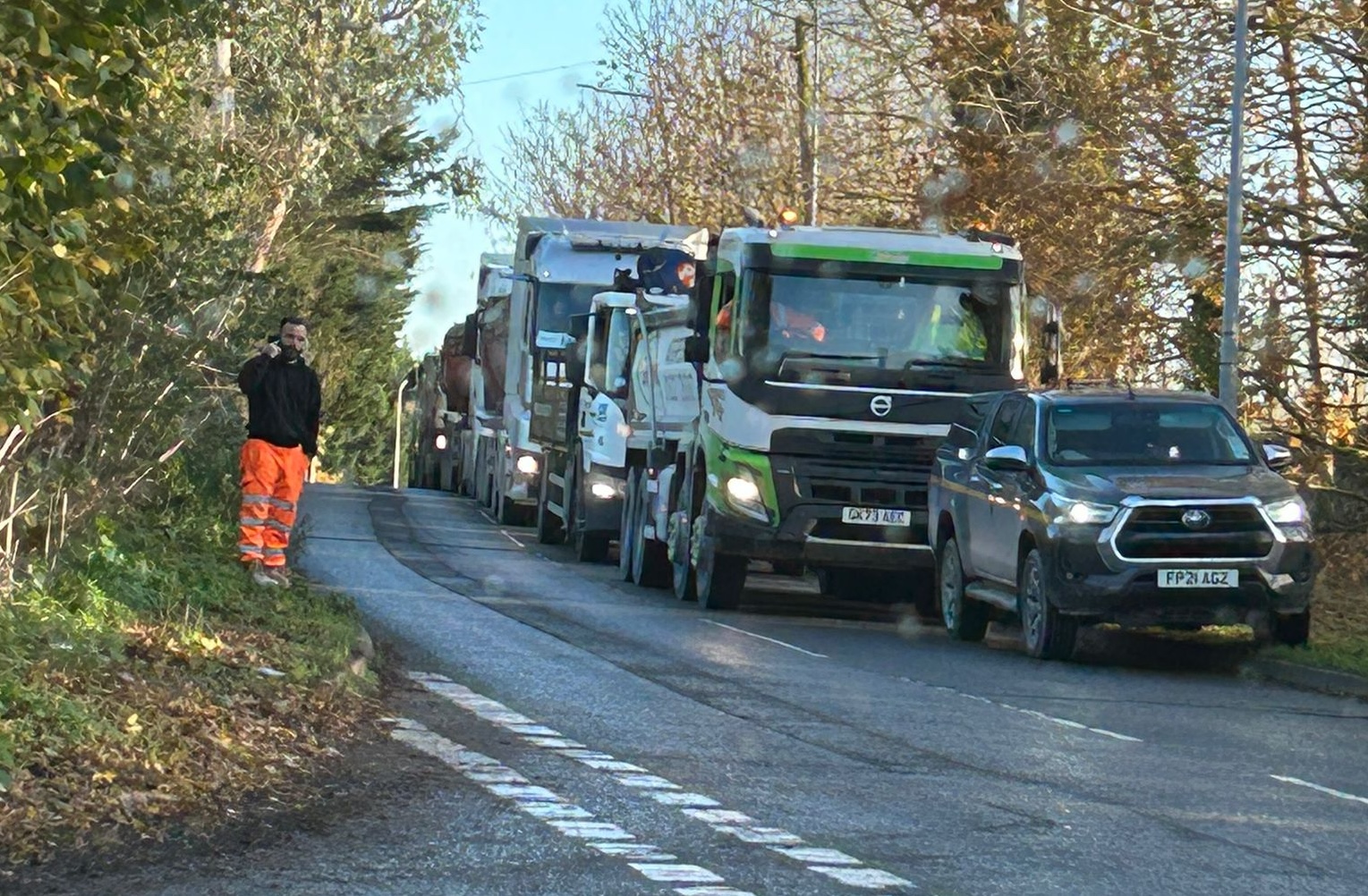
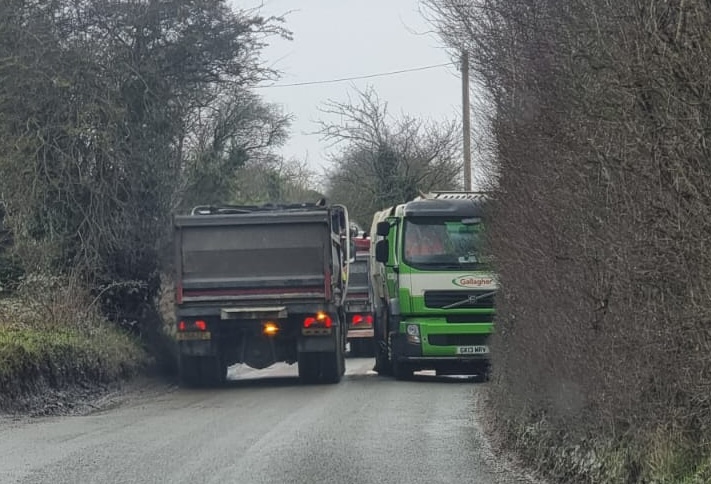
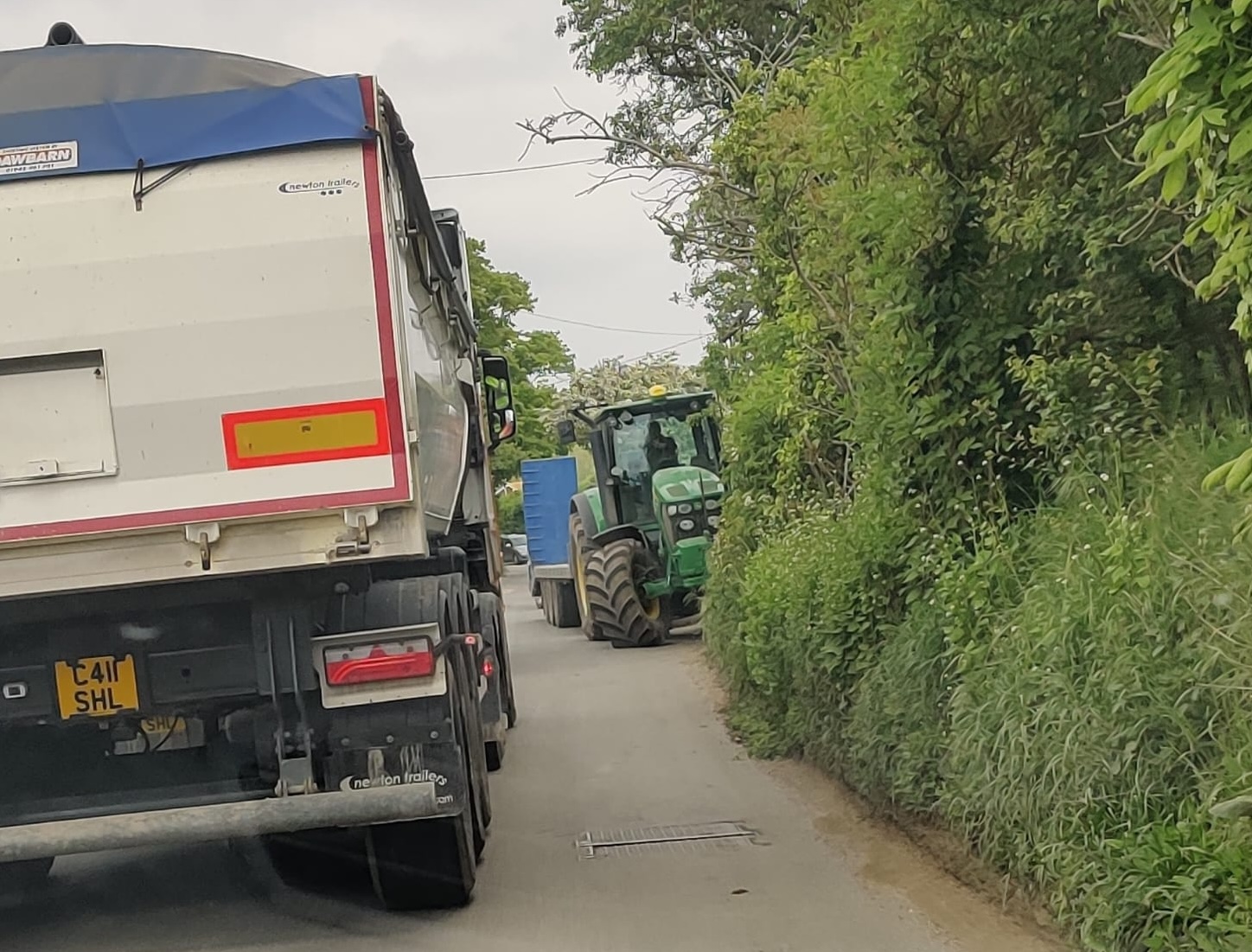
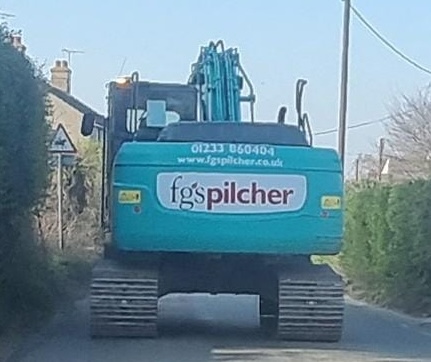
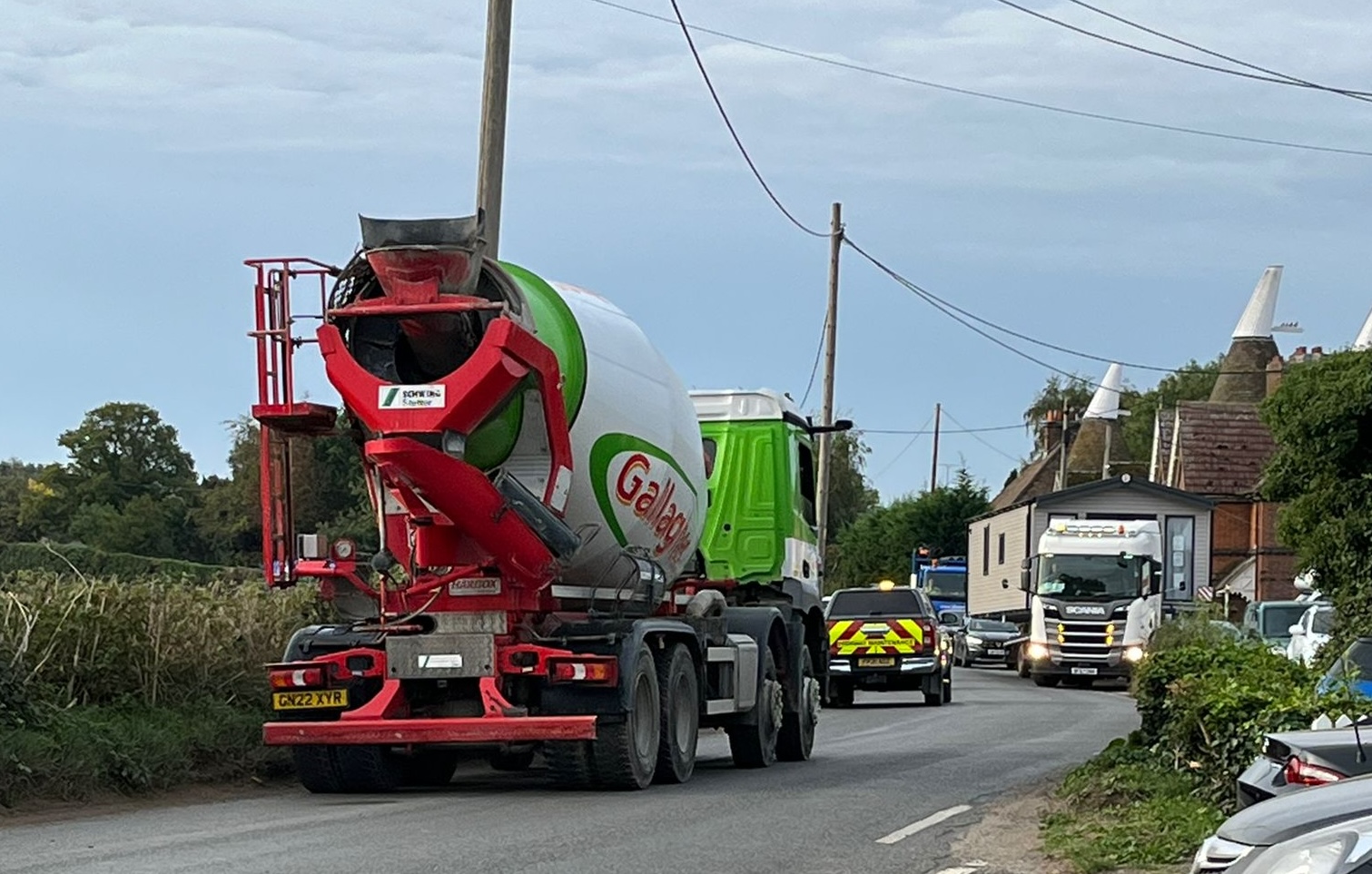
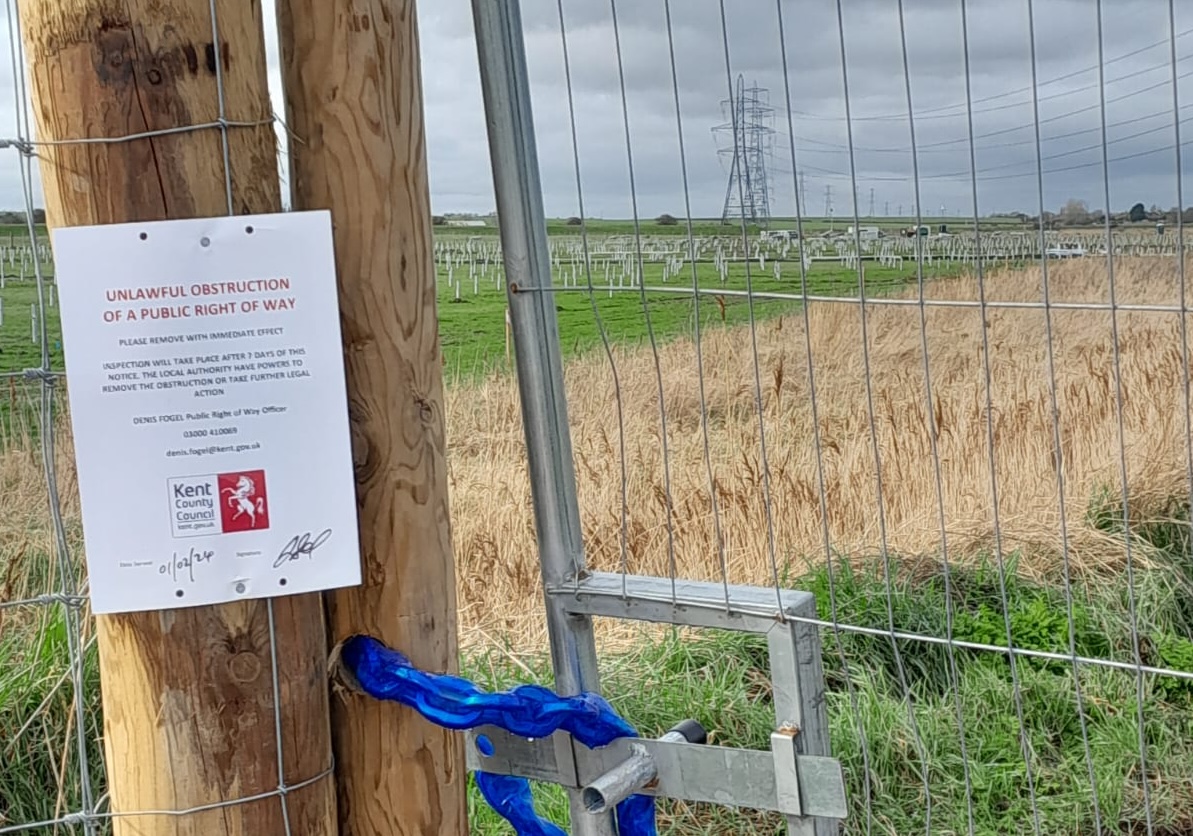
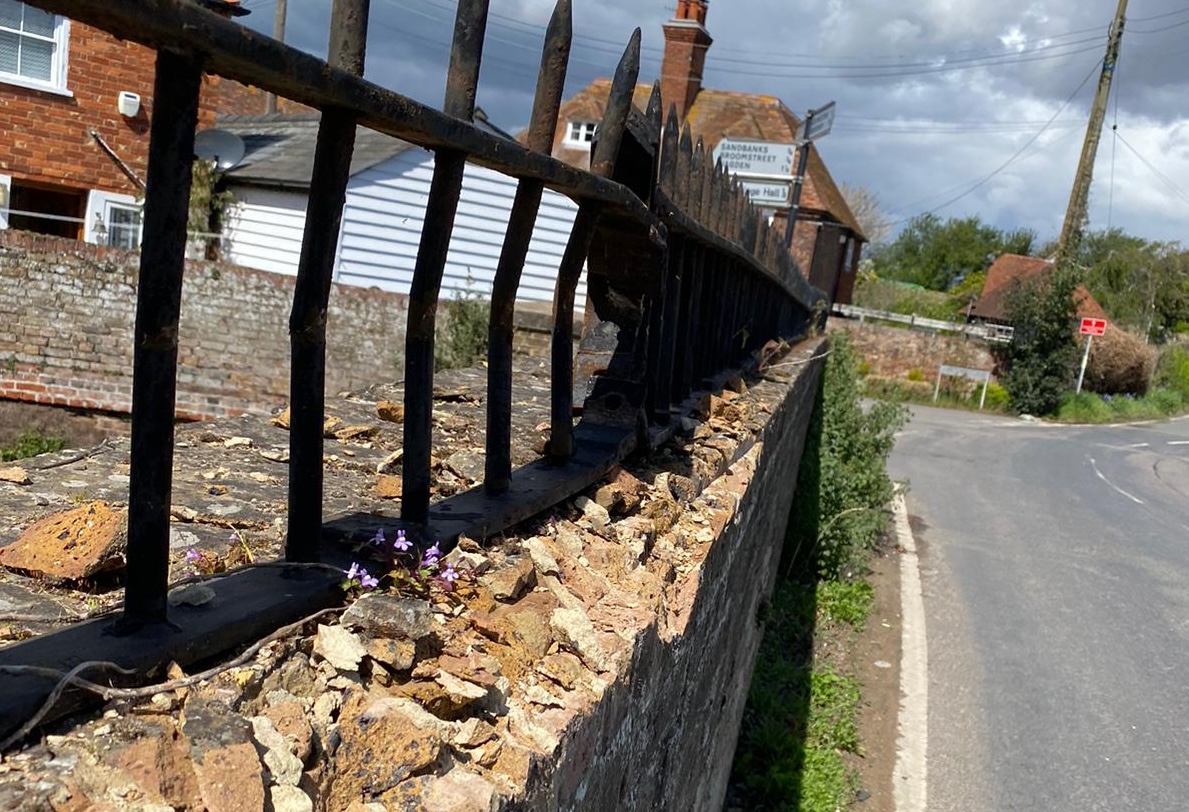
The Cleve Hill Solar Park brought traffic chaos, illegal closure of public footpaths and damage to the local community
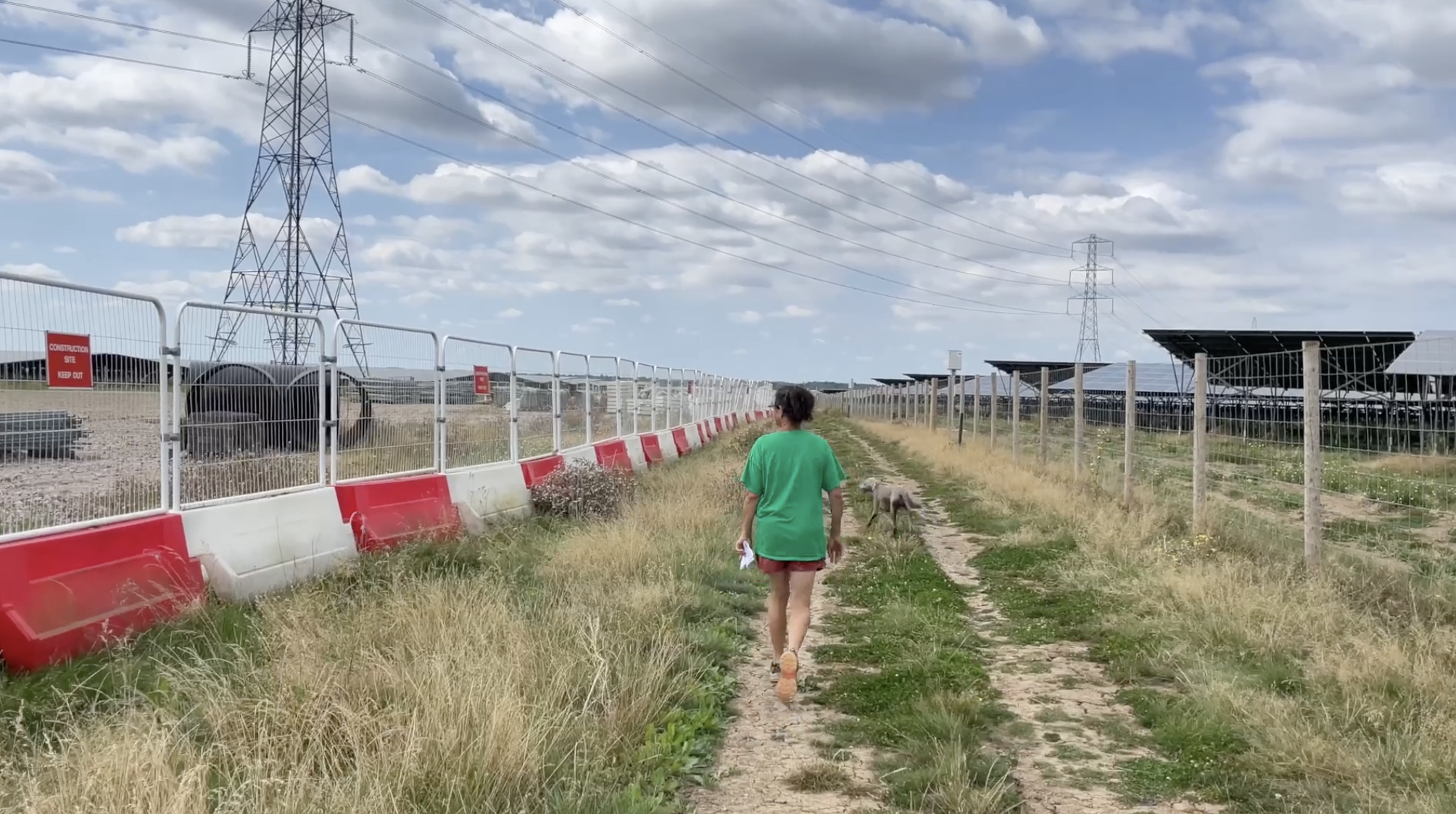
See how the Cleve Hill mega scheme compares to a ‘traditional’ solar site. Watch on Facebook or on Vimeo
📢 Play the audio clip to hear a typical pile-driving noise – it’s estimated that 250,000 metal posts would have to be pile-driven at East Park. The sound carries over long distances
 Stop East Park Energy