
Sign up to the campaign to keep up to date with the latest news and developments.
East Park hearings: HGV chaos, serious safety concerns, village disruption – and critical aspects of the project ignored or glossed over by the developer
“The wrong project in the wrong place”
22 March 2026 “The risks to road safety, disruption to daily life and pressure on local infrastructure are not incidental impacts – they are the direct result of placing an industrial-scale energy project in a rural landscape without the transport infrastructure to support it,” warned one local resident at one of the East Park Energy hearings this week.
Richard Fuller MP spoke out on day one and told Stop East Park Energy: “It was heartening to see so many residents come together and deliver such well-reasoned and compelling arguments against this proposal during the first of the Planning Inspectorate hearings this week – your presence is making it clear that this is the wrong project in the wrong place.
“As I argued in my own representation, our area is already facing a huge wave of cumulative change from national infrastructure projects, and we can only accommodate so much. We should be using rooftops and brownfield sites before we sacrifice 1,900 acres of our best farmland. Keep up the good work and let’s keep the pressure on!”
Speakers at the two days of hearings cautioned that the plan to bring well over 10,000 HGV movements as well as hundreds of LGVs onto narrow rural roads raises serious safety concerns across a string of villages and our vulnerable network of B and C roads.
Key routes like the B645 are already in poor condition and feature dangerous stretches such as Piggs Hill, a notorious local accident blackspot. A number of residents made it clear that under the developer’s current plans, lorries could be diverted through village centres, passing a primary school, narrow bridges and historic streets under 5 metres wide. A local transport manager told the hearing that HGV drivers will automatically choose the fastest or most economical route.
The developer’s plans also allow for 600 workers on average on site – creating peak-time traffic with no firm safeguards to avoid school runs or rush hour. Claims that site working hours of 8am to 6pm will not have an impact on local traffic were met with incredulity from local residents at the hearing.
One of the biggest concerns set out by speakers is that none of the traffic routes are legally enforced, meaning HGVs would be likely to use unassessed roads if congestion hits. In addition, locals would be forced to use ‘rat runs’ with critical roads more busy than ever and planned new “temporary” lower speed limits and traffic lights in place for extended periods of the multi-year construction programme.
With multiple major projects planned locally, residents fear quiet villages could become long term construction corridors with little protection in place.
A number of speakers questioned whether disruption on this vast scale is justified, noting the scheme – promoted as a 400MW project – would in reality deliver only around a tenth of that output on average, with very limited generation in winter and the battery system likely to operate largely as a lucrative stand-alone grid-trading facility rather than storing solar power.
Professor Michael Jefferson, former Deputy Secretary-General, World Energy Council, and contributor to the Intergovernmental Panel on Climate Change Nobel Peace Prize, spoke out at the hearing, making it clear that the level of annual solar radiation in the UK is much too low to justify such a scheme, and explaining that the World Bank ranks the UK 229 out of 230 for solar power potential. He said: “The crucial factor is that between mid-September and early April solar radiation levels are very low.”
He added: “The claim that the East Park scheme would achieve a load factor of 12.4% [in its first year] seems optimistic,” pointing out that nearby solar schemes have much lower ‘load factors’.
One local resident pointed out stark facts: “The scheme would contribute around one-seventh of one per cent of the UK’s electricity needs, on a highly intermittent basis, with extreme seasonal output swings. It cannot genuinely be characterised as “nationally significant”, or, for that matter, “reliable” as national energy policy statement EN-1 calls for.”
Other speakers focused on a wide range of issues, including:
- Questions around why the Planning Inspector has ruled out considering the potential for forced labour in the supply chain when the GB Energy Act includes “measures for ensuring that slavery and human trafficking is not taking place in its business or supply chains” for state-sponsored solar projects. One speaker asked: “So why would a huge commercial project like East Park not merit similar or greater attention?”
- Timing and viability risks around the construction of the huge solar site, which would coincide with the next General Election, raising the prospect of a new government putting in place policies to introduce a stronger focus on cost and pragmatism in the pursuit of Net Zero and close scrutiny of subsidies, contracts and other support for commercial renewable energy and storage projects
- The fact that insolation data for the region demonstrates that for five to six months of every year East Park’s on-site solar generation would be extremely limited, suggesting that Brockwell Storage and Solar’s 100MW battery energy storage compound would be charged using electricity imported from the grid instead of on-site solar – and electricity drawn from the grid is not always renewable
- The developer’s attempt to play down or completely ignore major project phases – the additional disruption, cost and environmental impacts of mid-term infrastructure replacement and decommissioning simply do not feature in a meaningful or transparent way in the plans
The hearings were filmed, and films and transcripts should be available on the Planning Inspectorate portal soon. Read Stop East Park Energy’s post-hearing submission on our new Planning Inspectorate submissions page.
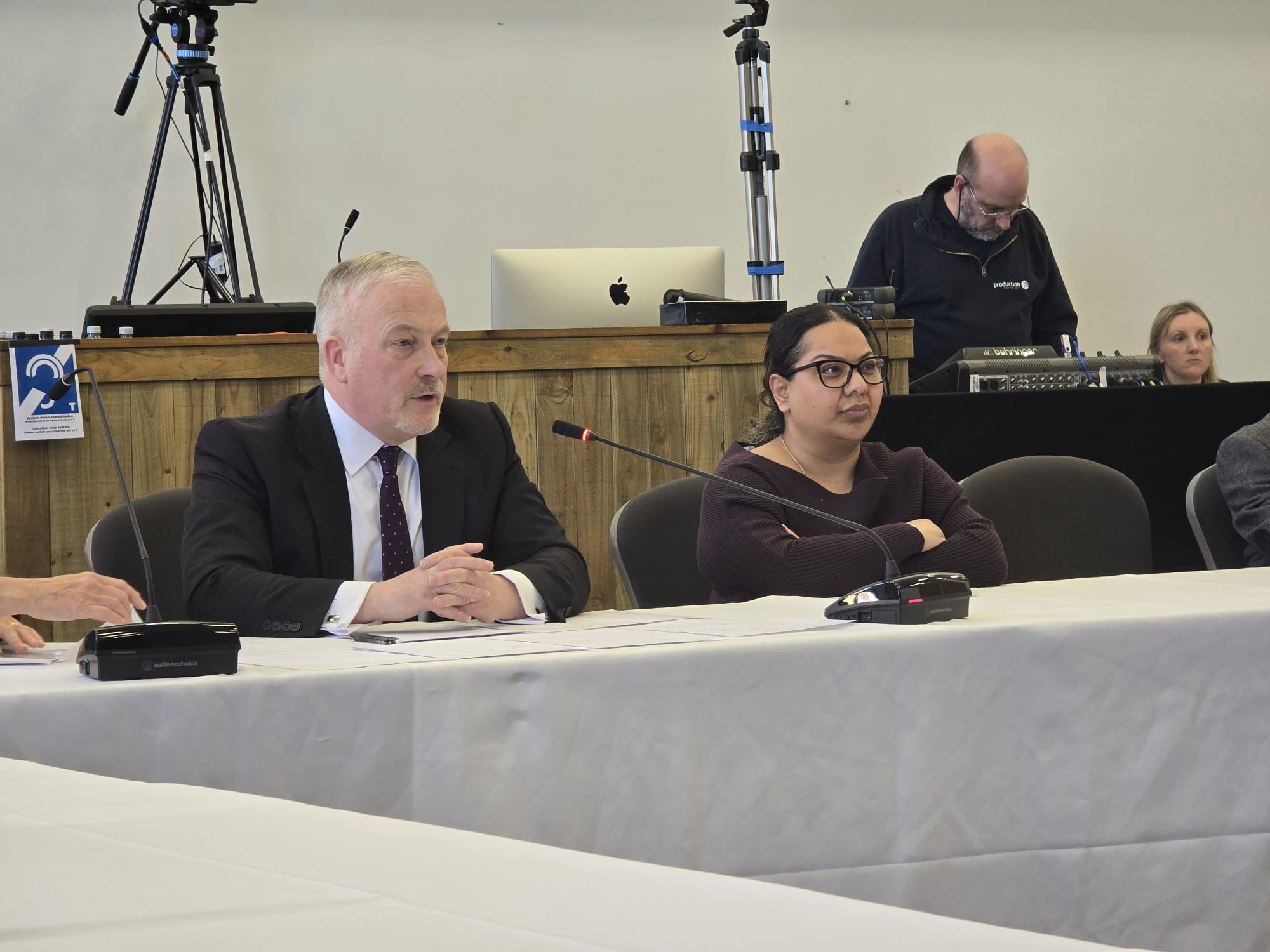
Richard Fuller MP and Cllr Sharanjit Sira were among a number of local political stakeholders articulating their strong opposition to the East Park solar and battery scheme at the hearings this week
MP says East Park will ‘crush’ the local environment – and raises fears over serious economic risks
30 January 2026 Local MP Richard Fuller raised significant concerns with the East Park Energy solar and battery complex during a debate he called for in the House of Commons this week. He told Energy Minister Michael Shanks: “The site will be a huge, permanent, unmissable and miles-long change to the local environment. It will not blend in with the existing environment; it will crush it.”
Richard raised issues ranging from the East Park developer’s “corporate history and financial viability”, through the “generational loss of arable land”, to the cumulative impact on the community of the combined six major ‘NSIP’ projects in the area.
He also highlighted key economic risks:
- the risk of stranded assets – the multi-year East Park construction programme could coincide with the next General Election and “at least one political party in this House has said that it might cancel such projects in the future”
- the “fundamental” change in the economic case for solar when developers like Brockwell Storage and Solar design their battery storage systems to pair solar-generated energy with energy arbitrage, buying-in energy from any source on the grid and selling it back at higher prices
- the lack of a limit on the debt ratios that large-scale solar plant operators like the backers of the East Park project can carry
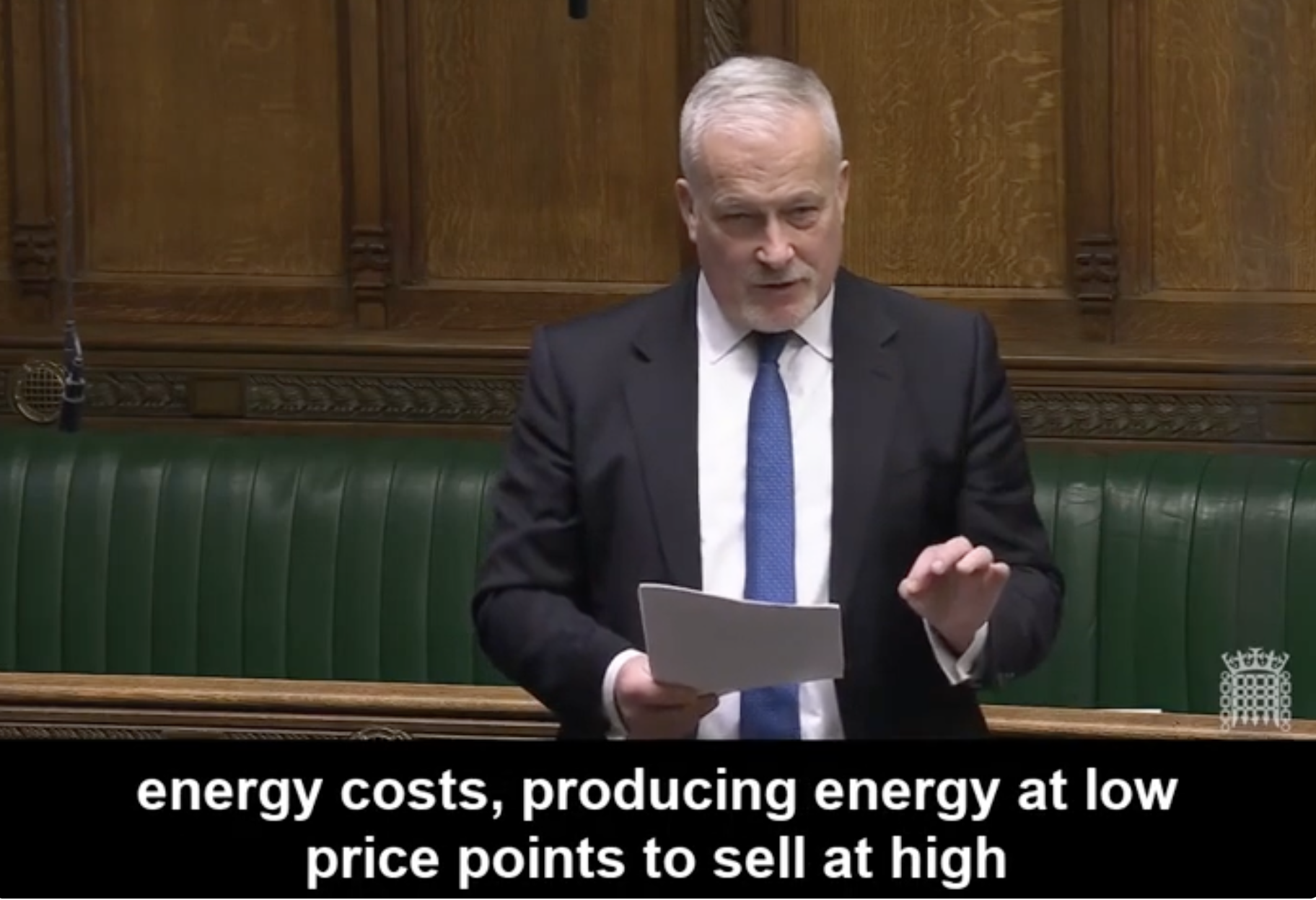
Richard Fuller MP raised a series of economic issues with commercial solar sites – operators of schemes like East Park plan to use their battery storage system’s import/export facility for lucrative energy trading, pushing up the cost of the electricity they sell
MP warns political risk of policy change at next Election could leave East Park half built or abandoned
21 January 2026 “In the past 12 months there has been a significant change in the political consensus on renewable projects with at least one national political party indicating that their policies would remove subsidies thus making many schemes financially unviable,” said North Bedfordshire MP Richard Fuller in his submission in opposition to East Park.
With the next General Election having to be held by June 2029, Richard cautioned: “The risk for this development is that construction could fall during an election cycle. If this is the case and … policy changes … occur, the project could lose its long-term revenue agreements. This would create a serious risk of the development becoming a stranded asset, partially constructed or abandoned, leaving incomplete infrastructure and causing lasting harm to the landscape of North Bedfordshire, as well as disruption to the local environment and community.”
Richard is one of a number of local political figures to have submitted formal objections to East Park and already made them public.
In a strongly worded submission to the national Planning Inspectorate, he set out a series of other concerns, from errors in the developer’s assessment of the cumulative impact of significant planned local and regional development, through the “generational loss of productive farmland”, to questions over the developer’s “lack of relevant expertise”. He described Brockwell Storage and Solar’s “absence of a proven track record in solar energy project delivery and operation” as a material risk.
Huntingdon MP Ben Obese-Jecty’s objection was unequivocal on this “low-yield, high-impact” plan too: “The current proposal prioritises low-yield energy generation over food security, rural amenity, and environmental protection … development consent should be refused.”
Ben highlighted both the scheme’s failure to meet government policy guidance to avoid good grade farmland, and its downplaying of cumulative local solar infrastructure impact – East Park would complete a 2,800-acre solar corridor. He raised serious concerns over the construction phase, which could last three years, warning it would “place an intolerable strain” on our narrow B and C roads. He cited the community experience at the Cleve Hill Solar Park in Kent, the only solar ‘NSIP’ built so far, where local residents suffered property damage as well as dust, noise and vibration impacts over a nearly two-year build.
East Park, in Ben’s words, “prioritises profit over food security, local safety, and environmental preservation”, and would bring “years of construction misery” while offering “benefits that are limited by climate”.
In his objection, Mayor of Cambridgeshire and Peterborough Paul Bristow described East Park as an outlier and “awful for local residents”. He singled out concerns over ‘taking out’ 1,900 acres from agricultural production, and raised the serious safety issues associated with battery energy storage – East Park would include 96 container-sized units packed with thousands of lithium-ion battery cells. He stressed that this form of tech poses a “significant long-term fire risk” while only meeting “very short-term needs”. He said: “BESS fires can burn for days.” Lithium-ion fires are virtually impossible to extinguish and release toxic gases over a wide area. Pollutants in the millions of litres of firewater runoff can cause lasting damage to soil and water courses. Paul warned: “I believe the proposed scheme presents an unacceptable risk to local people, wildlife and the environment.”
On the final day of the registration period, Cllr Sharan Sira managed to secure a cross-party motion at a full Bedford Borough Council meeting. The motion sets out concerns over the plan, and was finalised in time to submit it by the midnight deadline as an Interested Party registration.
All concerns or objections submitted by local councillors and a wide range of parish councils – in addition to a combined collective opposition statement from five of the impacted villages – should appear on the Planning Inspectorate portal soon.
We have also seen representations from other stakeholders ahead of the final submissions being published on the national planning portal. CPRE Bedfordshire’s submission set out concerns over the development of BMV farmland, the fire and explosion risks from the scheme’s battery storage system, the impact on the local communities of this “massive scheme” as well as the clear alternatives available via rooftop solar installations. CPRE research shows there is potential for 117GW capacity of low carbon electricity from roofs and other developed spaces – far more than the government’s 2035 75GW solar target. Vice Chair of CPRE Bedfordshire Paul Jenkins said: “The output from these colossal grid-scale systems is simply not worth the sacrifice of productive farmland.”
• Submissions added to the Planning Inspectorate website by the deadline of 14 January – including those from individual members of the community – should appear on its portal soon.
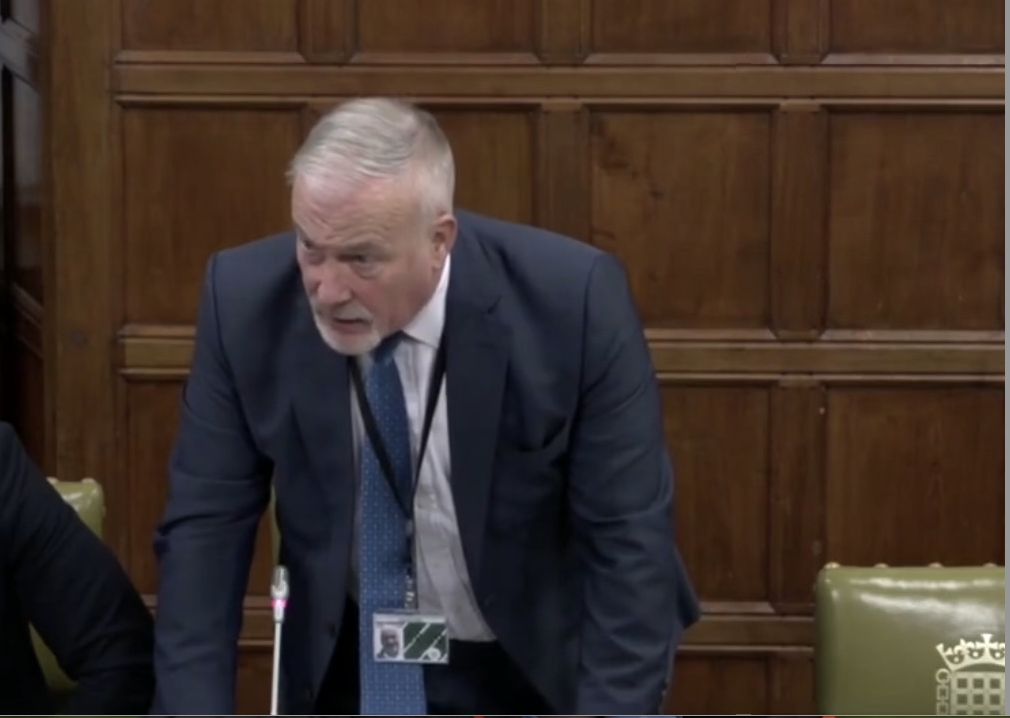
Richard Fuller MP set out a series of serious concerns in his online objection to East Park, including the risk of a change in government leading to a policy reversal that could jeopardise its financial viability
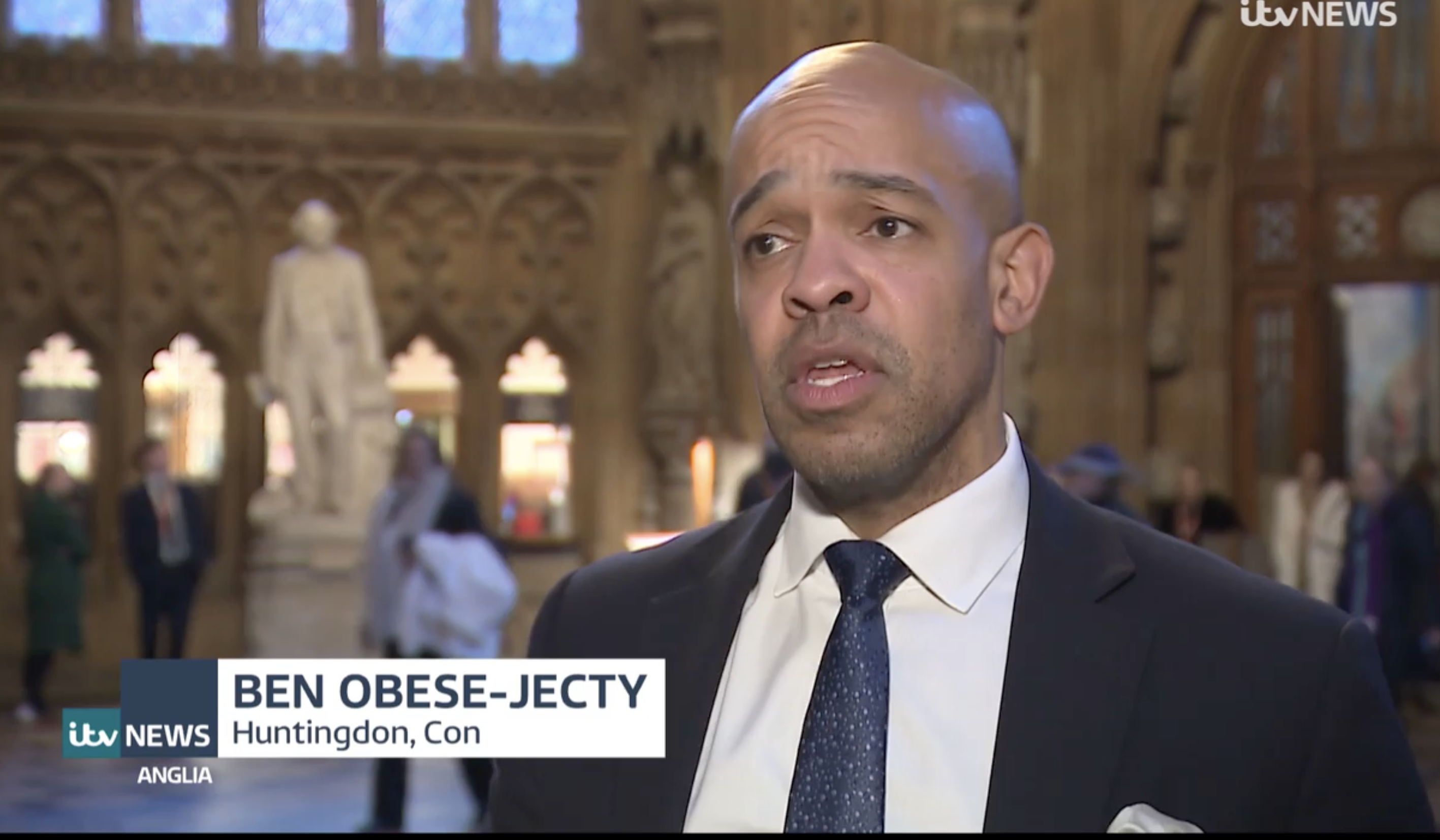
In an interview with ITV News Anglia, Ben Obese-Jecty MP highlighted concerns over the scale of the project, and said it would be a “huge blight on the countryside”. Watch the segment on East Park online here Image ITV News Anglia
Last few days to object! Deadline: Wednesday 14 January
12 January 2026 The clock is now ticking down to the deadline to object to East Park Energy.
The online objection portal will close on Wednesday 14 January at 23.59. Registering on the national Planning Inspectorate portal is the only way you can have your say.
Object here:
Get more information, tips and advice to help with your objection on our ‘Time to object’ page. Have a look at the facts and figures page – it highlights the sheer scale of the construction process and multi-site power plan.
This is a critical stage in the application process for the grid-scale East Park solar power infrastructure plan. Please make sure you register and object – and encourage friends, family and neighbours too. Anyone can object, and there are no limits on individual objections from one household.
Look at some of the many issues with the plan to build this massive solar complex on the prime farmland around our villages:

Register and object now: get support at a village helpdesk session
2 December 2025 The registration window to submit your objection is now open.
We all have until 14 January 2026 to register as ‘Interested Parties’ and set out our objections to the colossal East Park solar infrastructure complex. Registering on the national Planning Inspectorate portal now is the only way you can have your say.
Register and object here:
Get more information, tips and advice to help with your objection on our ‘Time to object’ page.
Have a look at our new facts and figures webpage – it highlights the sheer scale of the construction process and multi-site power plan.
And if you need any support with registering or making your objection, we have now confirmed our helpdesk details, so please join one of the five drop-in sessions – find details here. Members of the Stop East Park Energy team will be on hand to help.
This is a critical stage in the application process for the grid-scale East Park solar power infrastructure plan. Please make sure you register and object – and encourage friends, family and neighbours too. Anyone can object, and there are no limits on individual objections from one household.
Look at some of the many issues with the plan to build this massive solar complex on the prime farmland around our villages:
Shocking new drone footage of solar plan released
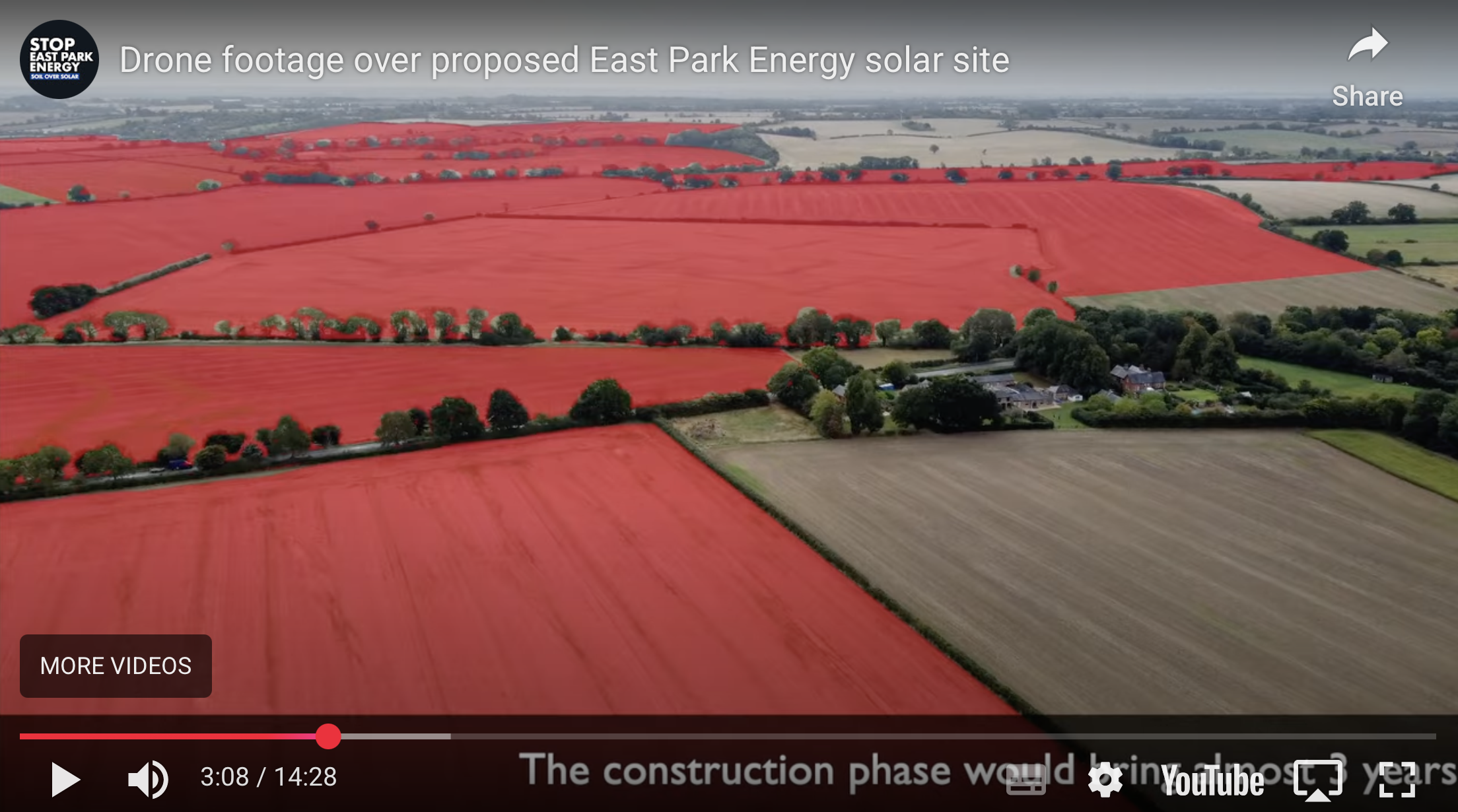
23 November 2025 New drone footage showing the entire East Park Energy plan is now live on our YouTube channel.
The film shows the full scale of the proposal and where the solar power infrastructure would go, field by field. Look at the footage, captured via a drone flight that travelled over 26km.
We are now close to the most important stages in the application process for the colossal East Park grid-scale solar complex.
It will soon be time for registration to open for everyone to sign up as ‘Interested Parties’ to the East Park application. Registering as an Interested Party is the only way all of us will be able to object to the plans.
Find out what you can do right now as we wait for the registration window to open up to allow us all to sign up as Interested Parties.
Look at some of the many issues with the plan to build this massive solar complex on the prime farmland around our villages:
- Why stop East Park
- What the developer’s PR doesn’t tell you
- UK solar power output is too low to sacrifice fertile farmland
- The ‘nightmare’ build process the community living right by the UK’s first solar ‘NSIP’ had to live through
As soon as the registration period starts, we will schedule a series of village helpdesks. Members of the Stop East Park Energy team will be on hand to offer support to people registering online or submitting objections.
MP opens high turnout community meeting to kickstart critical ‘Pre-Exam’ stage
9 November 2025 Our meeting to kick off the most essential stage in our fight against the East Park Energy solar complex plan was ‘standing room only’ as concerned residents from across the community packed Little Staughton Village Hall.
One of our two local MPs, North Bedfordshire’s Richard Fuller, made it clear that locals have his full support in opposition to the 1,900-acre solar facility, which would have a bigger footprint than Gatwick Airport.
As new drone footage was screened to show the full extent of the solar infrastructure coverage, in field by field detail, there were gasps of shock from the audience as everyone took in the actual scale of the East Park proposal. Seeing the site plan mapped out onto our countryside, and realising how close the new complex would be to individual properties, villages, roads and public rights of way, as well as the overwhelming scale, left local people genuinely staggered.
One resident commented afterwards: “I knew it was big, but until you see it like this, field after field after field, with all the local landmarks and the villages and roads we all know so well, it is just horrifying. There’s no other word for it.”
Another added: “Our countryside just wouldn’t be our countryside any more. It would change where we all live literally beyond recognition.”
As well as screening the footage, which involved a drone flight of 26km to capture the whole site, a member of the Stop East Park Energy team talked everyone through the Nationally Significant Infrastructure Project process. The event closed with a Q&A session with the wider team covering some of the major issues with the colossal solar plan.
It will soon be time for everyone to object to the proposal.
- The scheme is currently at what is called the ‘Pre Examination’ stage, which is usually around three months. During this period, the developer will decide when to open the process up for people to register to object, as ‘Interested Parties’. The timing is down to the developer, so we are on stand-by for this critical registration period.
- You can prepare for the start of the objection process right now – find out more here.
- Once the registration window opens, we will be running a series of ‘Sign up to object’ workshops across the villages – keep an eye out for dates.
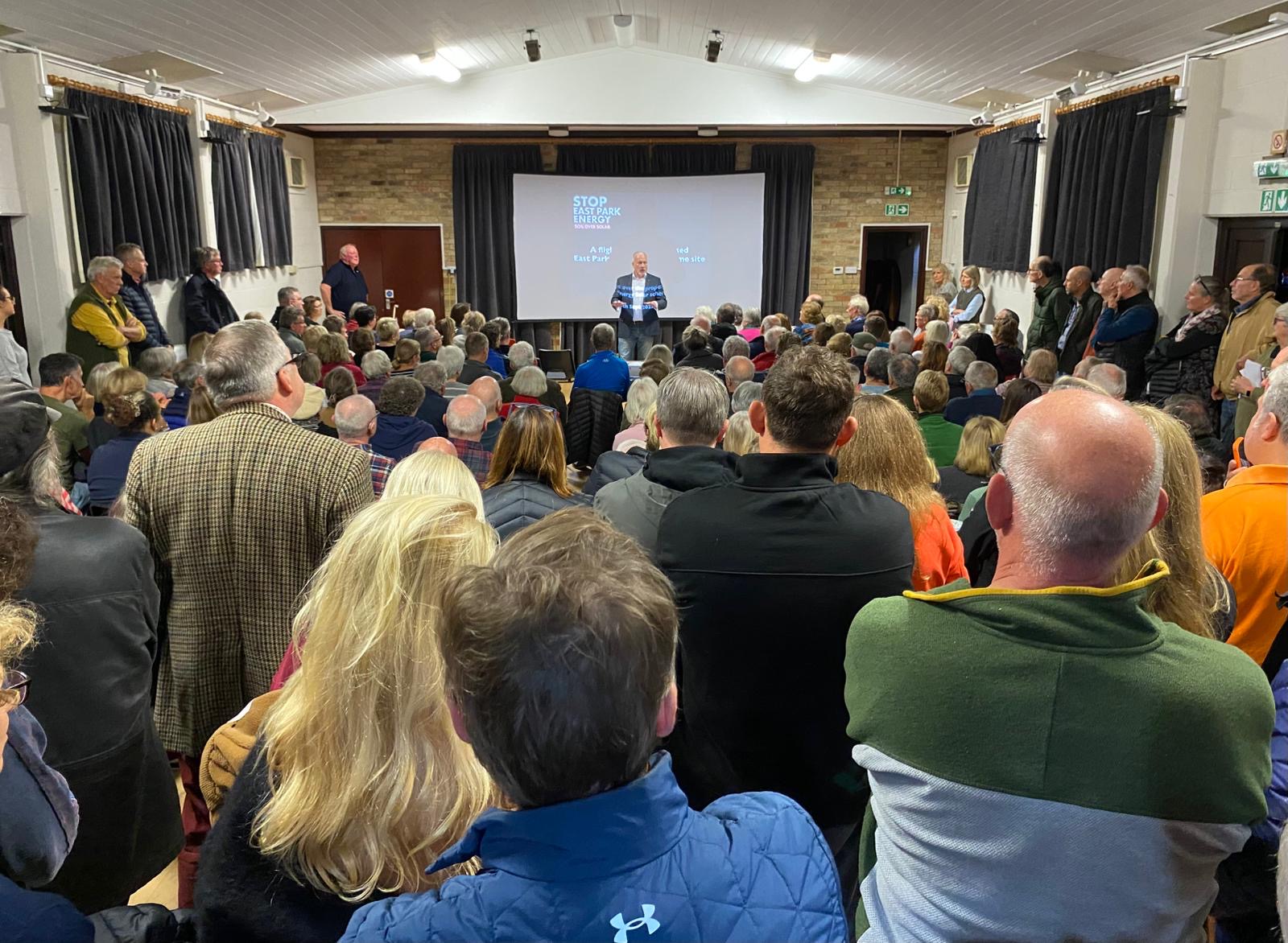
Richard Fuller MP opened the packed event and urged everyone to do their bit to “Stop East Park Energy”
Important community meeting planned for 6 November
17 October 2025 Now that the East Park application has been submitted to the Planning Inspectorate, we all need to get ready for the next critical part of the process.
We will soon have our ONLY CHANCE to submit our objections to national planning inspectors. Hundreds of us set out our concerns last year – but just to the developer. Now we have to object again, this time to raise all the issues with East Park directly with the Planning Inspectorate.
In preparation for this important stage, we are organising a community event open to all residents from across the impacted villages:
6–8pm, Thursday 6 November, Little Staughton Village Hall, MK44 2BX
- See shocking new drone footage of the whole site – field-by-field mock-ups showing exactly where the vast East Park development would be built. The drone flew more than 26km to capture the length and breadth of the scheme
- Find out how and when you can object – and the support that will be on offer
- Get more details in a Q&A session – the Stop East Park team will be ready to answer your questions on the application, the grim details of a noisy, disruptive three-year build bringing hundreds of site workers and HGVs into our rural community, and the realities of living in an industrial energy zone complete with an energy storage compound filled with thousands of lithium-ion battery cells, which come with serious fire and explosion risks
If East Park gets green-lighted, we will end up with an enormous industrial development on the farmland surrounding our villages. This major infrastructure site would take three years to build and bring construction chaos to our whole community.
Let’s all fight to save our countryside and STOP East Park Energy!
Bigger than Gatwick Airport • 1,900 acres • 6 miles long • 34 times the size of Grafham Water solar complex • 700,000 solar panels • 40 miles of impenetrable fencing • compromised public rights of way and bridleways • CCTV • security lighting
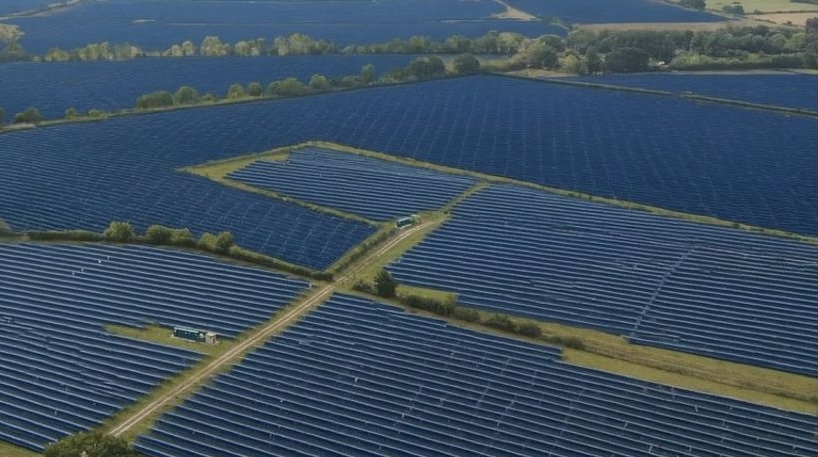
This CGI shows just one small section of the East Park Energy facility
East Park Energy application is now live
6 October 2025 The developer behind East Park Energy has now submitted its application to the national Planning Inspectorate. The notification was released late on Friday.
What does this mean?
East Park Energy is such a massive power scheme that it is treated as a Nationally Significant Infrastructure Project. The application is now formally part of the NSIP planning process.
The application starts at what is called the ‘Acceptance’ stage, meaning that the Planning Inspectorate will be looking at it to decide if it meets its criteria to join the NSIP process. The Inspectorate has up until 31 October to decide whether to accept it for examination.
Once it has been accepted into the system, the full application will be uploaded to the national planning portal and we will all be able to see the final details.
When can we object?
We will only know when we can start taking action when the developer, Brockwell Storage and Solar, decides the date when everyone can register as an ‘Interested Party’ and make their objections and concerns known.
Remember that the comments we all made during the statutory consultation last year were only sent to the developer.
Signing up to become an Interested Party is the ONLY way you will able to raise issues and concerns with the project directly with the planning inspectors.
How do we object?
You will need to register as an Interested Party on the Planning Inspectorate website. Registration will open once the developer has named the date for the registration window to start.
We will be running special community sessions across the villages on registering as an Interested Party and how to prepare your objections and concerns for submission. As part of the sessions, we will be screening new drone footage of the entire site showing the planned solar infrastructure – the film shows how vast the installation would be.
There are countless reasons to stop East Park Energy. This colossal solar facility would be built on 1,900 acres of prime farmland spanning the Bedfordshire and Cambridgeshire border. If the scheme is approved, the construction programme would take around three years, seeing up to 850 workers on site at peak times, and thousands of HGV movements onto the busy B645 and village roads ranging across the whole site, as well as access routes to the A1 and A14 which are likely to bring construction traffic to Kimbolton, Perry and other local communities.
What can you do right now?
- Look back at your original objections and update them ready to submit a brief summary to the Planning Inspectorate when you register as an Interested Party – you may need to check the final application for changes
- Have your original objections ready to check against the developer’s Statement of Community Consultation – it is important that we inform the Inspectorate if any issues have not been addressed
- Keep an eye out for news from the Stop East Park team on the community sessions we will be organising
- Make sure your friends and neighbours are registered as part of our community opposition group – that way, we can keep more people up to speed with important actions and deadlines in our fight against the East Park solar facility and battery energy storage compound
- Register for updates on the East Park Energy planning portal page
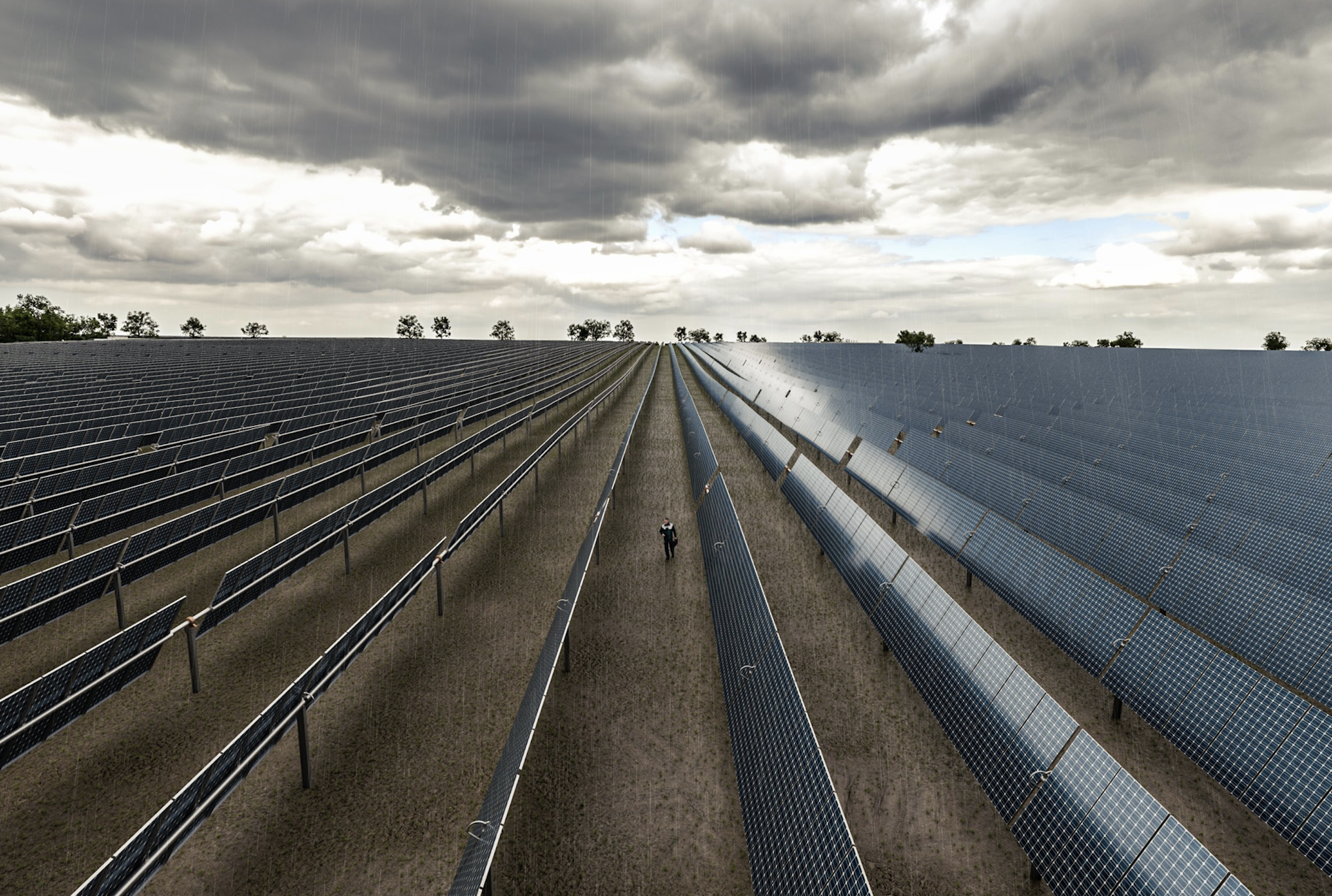
CGI courtesy UK Solar Alliance
Our fight to try to stop East Park Energy is starting again
26 September 2025 The developer behind East Park is about to submit its final application to the national Planning Inspectorate. If it gets green-lighted, our community would have to live through a 3-year build programme that would create a vast solar power facility on field after field right around our villages. It would be bigger than Gatwick Airport, four times the size of Bedford’s new Universal studio and 34 times larger than the Grafham Water solar array. The countryside we love and live in would change beyond recognition.
This isn’t a ‘solar farm’ – the East Park Energy development is a solar power station. Its nameplate capacity of 400MW is just over half the capacity of the nearby Little Barford power plant
The solar proposal is on a colossal scale:
- 7,200 traffic movements – 1,400 artic trucks just to deliver the panels
- up to 850 construction workers – at peak times, about 10,200 weekly traffic movements just for the workers
- 700,000 photovoltaic panels mounted on around 250,000 metal posts installed with noisy pile-driving
- 40 miles of mesh fencing and around 12,000 metal fence posts
- 1,900 acres of 74% ‘Best and Most Versatile’ farmland switched to power production
- a 100MW lithium-ion battery energy storage compound with 120 shipping container-sized units
So far, we have only been able to put our objections to the developer, Brockwell Storage and Solar, and our local councillors and MPs. Now, we are very near the stage when we can all raise our concerns direct with national planning inspectors. The application is due to be submitted any day.
- After the application has been accepted into the planning system, we will all have around 28 days to register on the Planning Inspectorate’s website as an ‘Interested Party’ so that we can start by giving a summary of our concerns
- It’s important that as many people as possible get involved and have their say
- We will be running special helpdesk sessions on the application process in our village halls – look out for details
- If you haven’t signed up to Stop East Park Energy yet, then do that now. We can then keep you updated on next steps, important actions and critical deadlines
Let’s all get ready to fight to save our countryside together.
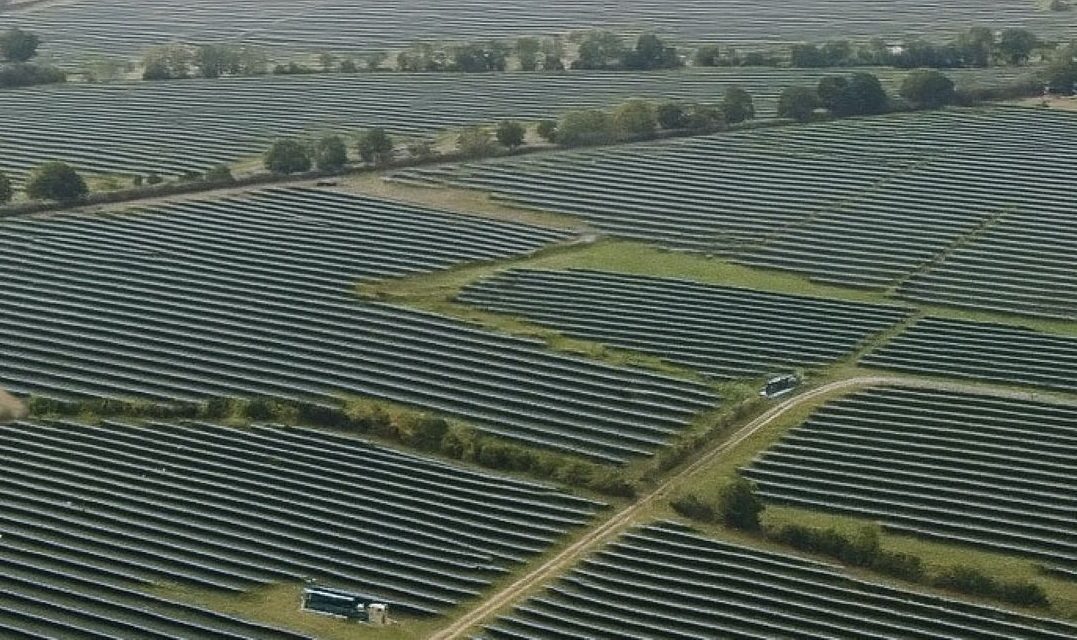
CGI of how solar tech coverage in just one small section of the East Park plan could look
Solar pipeline now targets farmland the size of Derbyshire
5 August 2025 Developers are now looking to build solar facilities on well over half a million acres of UK land, almost exclusively farmland.
The current pipeline of ground-mounted solar projects threatens to take out land equivalent to Derbyshire – three times the farmland claimed by the government – and would put solar development at nearly double the government’s 2035 target. Significantly, it amounts to around 5% of all UK cropland, and is concentrated in some of the UK’s best food-producing regions.
These troubling new figures have just been exposed by a new campaign called Stop Oversized Solar. The campaign brings together 15 rural community groups fighting solar mega schemes up and down the country, and includes Stop East Park Energy.
The group has come together with a commitment to reveal the real story behind planned solar ‘NSIP’ mega schemes. The massive new proposals like East Park – on a scale never seen before in the UK – typically have the footprint of an international airport.
Stop Oversized Solar has also revealed that the government has bowed to pressure from the mega solar development sector. Following lobbying from one of the solar trade bodies as well as a range of individual solar developers, solar capacity targets for each region have been changed to benefit mega scheme developers. The original grid-scale (‘transmission’) targets have been merged with local level (‘distribution’) targets, effectively giving the grid-scale solar developers the bigger capacity targets they pushed for in a lobbying drive earlier this year. The new ‘one pot’ regional targets mean that grid-scale developers are more likely to secure the all-important grid connections to make their huge solar development schemes on farmland viable.
Not only does this mean that more of the grid-scale solar facilities like East Park Energy could be built on farmland, but also that smaller scale local schemes like warehouse, commercial and industrial park solar rooftop systems, car park canopies and community-based land schemes are more likely to be crowded out of grid connections.
The government’s critical shift in solar strategy came after the publication of its Clean Power 2030 plan late last year, and was made in a low key ‘update’ to a technical annex months after the original strategy had been published.
Professor Tony Day of the Stop Oversized Solar campaign said:
“The government’s strategy on solar is wrong – and the solar data that we are exposing is disturbing. The pipeline is now massively over target, with an area of farmland the size of Derbyshire set to be covered in solar panels running into hundreds of millions. The more solar capacity we install, the more we depend on an unreliable source of energy.
“And we are highlighting that targets have been manipulated after lobbying from the highly commercial solar sector, not based on need. We struggle to get even 10% average energy yields on solar, so it’s much more logical to prioritise local solar schemes like commercial rooftop arrays or car park canopies instead of grid-scale mega schemes on good farmland. Now we could see these sensible schemes squeezed out while even more super-sized schemes get the grid connections.
“With hundreds of thousands of acres of UK farmland set to get consent nodded through for a change of use, and many solar developers part of international groups or with international private equity backing, this rural land-grab is controversial and should set alarm bells ringing. We are sleepwalking into a colossal countryside land-take.”
Read the full news release and briefing for more information.
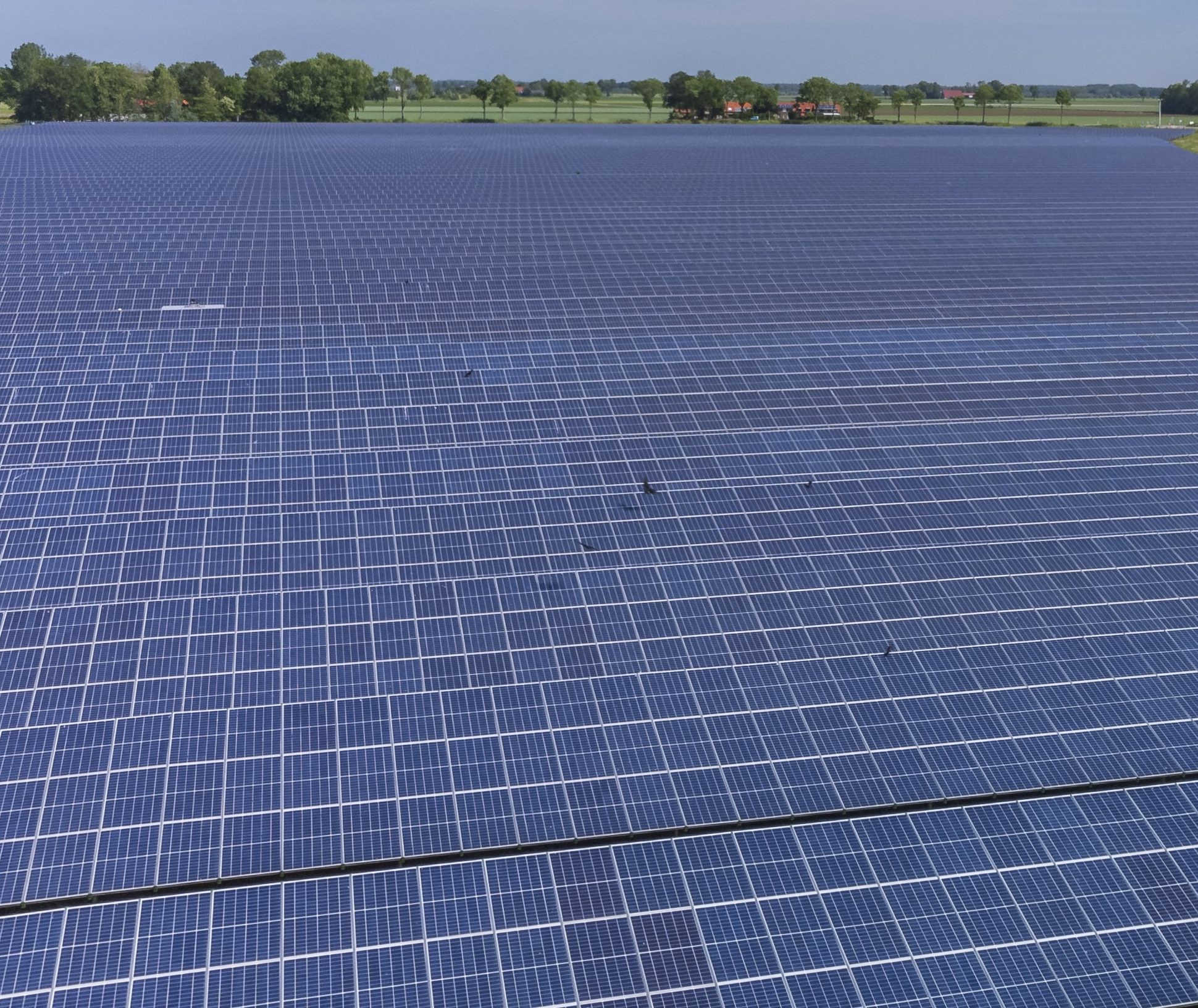
“We are sleepwalking into a colossal countryside land-take.” The UK’s current ground-mounted solar pipeline stretches far beyond government claims – it would cover three times the farmland claimed by the Department for Energy Security and Net Zero
‘I can’t think of anything worse than having huge acres of solar panels’: mayors oppose solar development on good farmland
30 July 2025 “I’m a farmer and I just can’t think of anything worse than having huge acres of solar panels taking up what should be providing food for the country,” said Tom Wootton, Mayor and Leader of Bedford Borough Council, speaking out in opposition to solar panels on agricultural land.
Referring to the 1,900-acre East Park Energy solar mega scheme proposal that would span the Bedfordshire and Cambridgeshire border, Mayor Wootton commented: [It is] really very worrying because so many local villages are against it. It means a change from agriculture to industrialisation of the countryside.”
Paul Bristow, Mayor of Cambridgeshire and Peterborough, added: “We want to put forward a policy that prime agricultural land – Best and Most Versatile grade – should be used for food production, not for energy.
“As Mayor I shall do everything I can to prevent giant solar farms across Cambridgeshire. I am producing a new spatial development strategy – a Cambridgeshire-wide local plan for land across our region. In it will be new rules attempting to stop these giant solar farms.”
The two mayors’ opposition to solar development on productive farmland has been made clear in posts on Instagram and X and comes in the same week as news is released of the completion of a major installation of rooftop solar on the Co-op’s regional distribution centre in Biggleswade. The new rooftop scheme uses around 7,000 solar panels. East Park is almost 100 times the size, with 700,000 panels likely to be imported from China to take out an area of high grade farmland bigger than Gatwick Airport.
Stop East Park Energy spokesperson Roy Palmer said: “We really welcome the support of our two local mayors – they are absolutely right to try to protect good farmland. The East Park developer is targeting land that is very high grade, productive farmland that has been growing food for centuries.
“The Co-op rooftop solar scheme is a far more logical option for a form of renewable tech that performs inefficiently in the UK climate – it’s a win-win, doubling up land use, providing local power over the summer months and avoiding any agricultural land-take.”
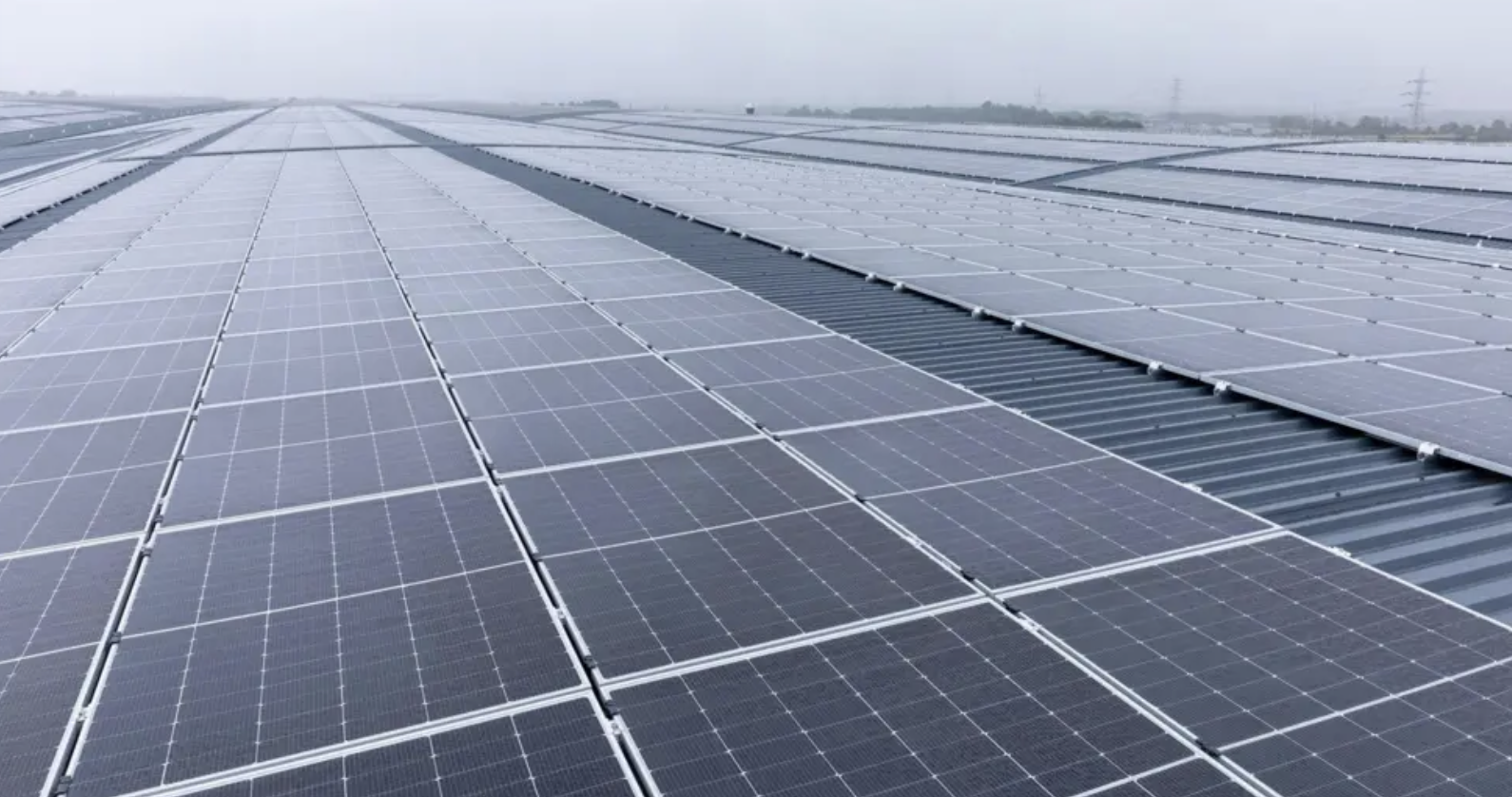
The new Co-op rooftop solar scheme in Biggleswade is part of the organisation’s plan to install solar panels on up to 700 sites across its food, funeral services and logistics portfolio Photo MOLYNEUX ASSOCIATES
Hundreds join Community Walk where MP calls out East Park as an unjustified ‘industrial facility’ targeting good farmland
9 June 2025 “The UK comes last but one in a list of 230 countries rated for solar power potential – only Ireland is ranked lower,” said Richard Fuller MP, calling into question the value of the vast East Park solar plan. Solar power across the country delivered just 9.9% of its capacity on average last year, making it the UK’s worst performing renewable.
“We can all get behind ‘good’ renewables, but this is purely about developers making money – solar schemes like East Park are on the wrong scale, in the wrong places. We have plenty of commercial rooftop space lying empty locally, along the A1 and A421.”
Richard also made the point that East Park is not a solar ‘farm’ – it would be an “industrial facility”.
The North Bedfordshire MP welcomed between 250 and 300 people from every generation to the Community Walk, in an event that formed part of a national initiative. Around 30 community groups concerned about mega-scale solar infrastructure proposals targeting farmland sites up and down the UK all started their walks at the same time, each walking a route around a small fraction of their local solar plan.
People from across all the local villages and well beyond took part in Stop East Park Energy’s Community Walk, and as well as Richard Fuller, we welcomed support from parish council chairs, parish councillors, Cllr Sharan Sira, and Paul Jenkins from the Campaign for the Protection of Rural England.
The Community Walk was planned on public footpaths at the Little Staughton section of this massive solar facility plan. The route was across rolling countryside and through fields growing crops including barley and wheat, and walkers were accompanied by the sound of skylarks singing.
“I had no idea the scheme was going to be so big – it would stretch further than the eye can see,” said one walker, reflecting the comments of many. Another was equally shocked to realise that while the footpaths were surrounded by the solar site plan for much of the walk, with virtually every field earmarked for development, it was “just one small part of the overall scheme”. Others commented on how fertile the farmland clearly is, with crops looking healthy and plentiful.
Another local said: “Calling this a planning application doesn’t really cut it. That makes it sound like someone has put in for a new garage. This is wholesale industrialisation of our countryside – especially when you know that across the UK an area of agricultural land bigger than Merseyside is already up for solar development.”
One local man walking with his wife was determined to complete the Walk, despite the fact that he had had a hip and knee replacement. His wife stopped regularly to take photos to send to her children. She said: “They might not live here anymore but their childhood was spent in this area and they are absolutely committed to trying to preserve this landscape.”
Evidence of the ongoing archaeological trenching work was everywhere on the route, the many ‘live’ or backfilled trenches highlighting just how many fields the developer is planning to flood with photovoltaic panels. The recently discovered remains of a small Roman town near Great Staughton during exploratory work for the solar facility triggered a wider and more in-depth search of the 1,900-acre site that Brockwell Storage and Solar is targeting for development.
Locals on the walk raised concerns including the dangers and disruption the site traffic would bring, the noise, dust and disturbance of three years of construction chaos, and the fact that the low levels of solar power the East Park facility would be capable of producing did not justify the agricultural land-take.
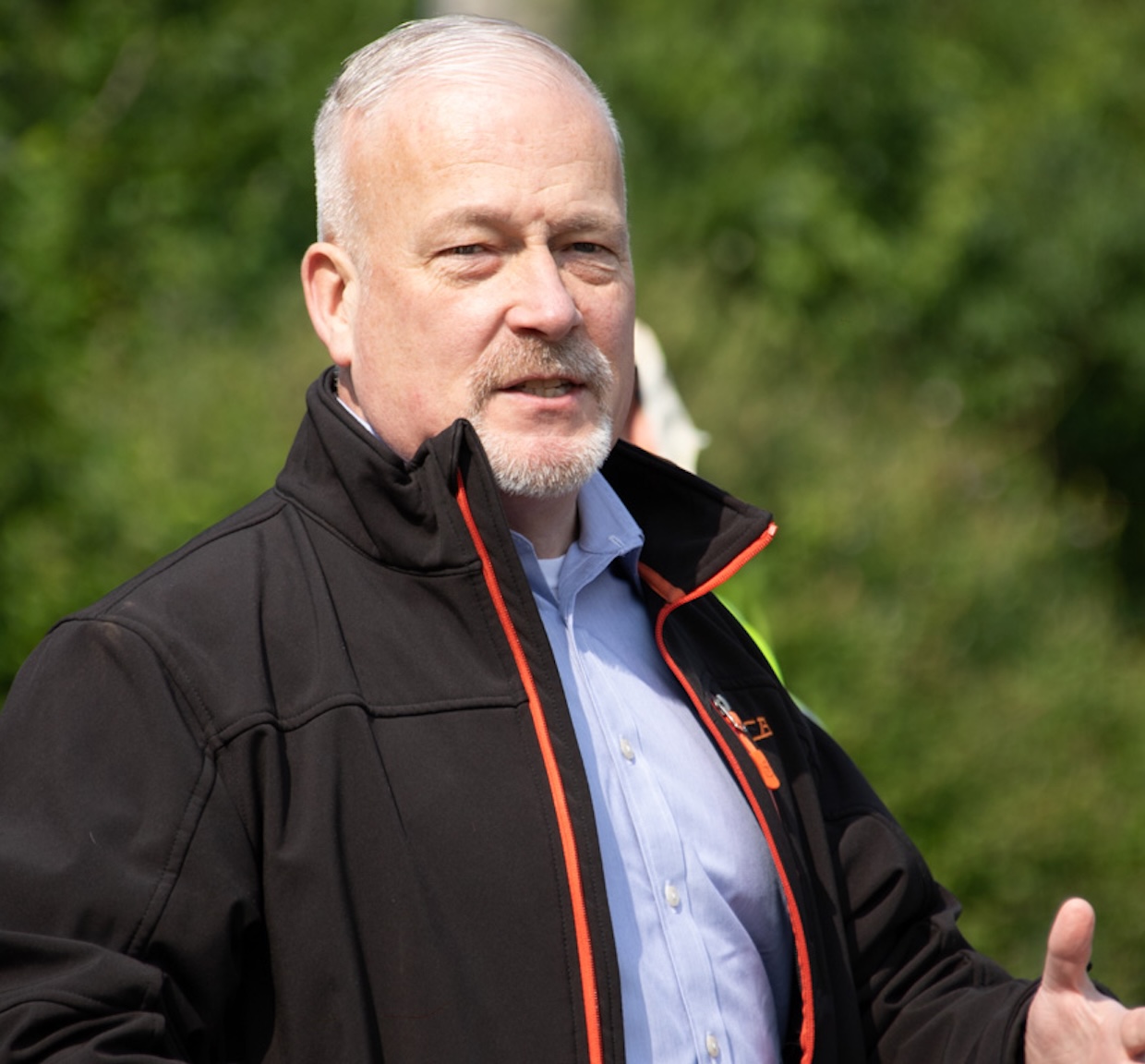
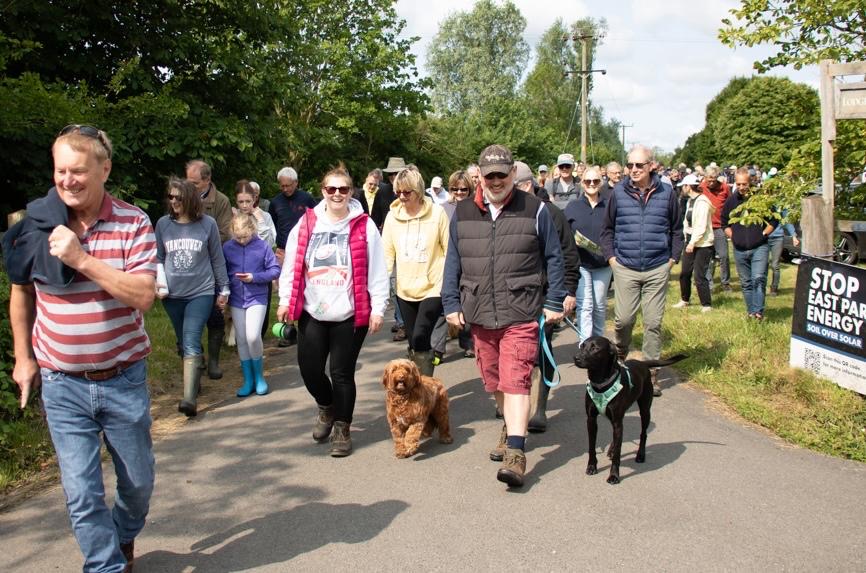
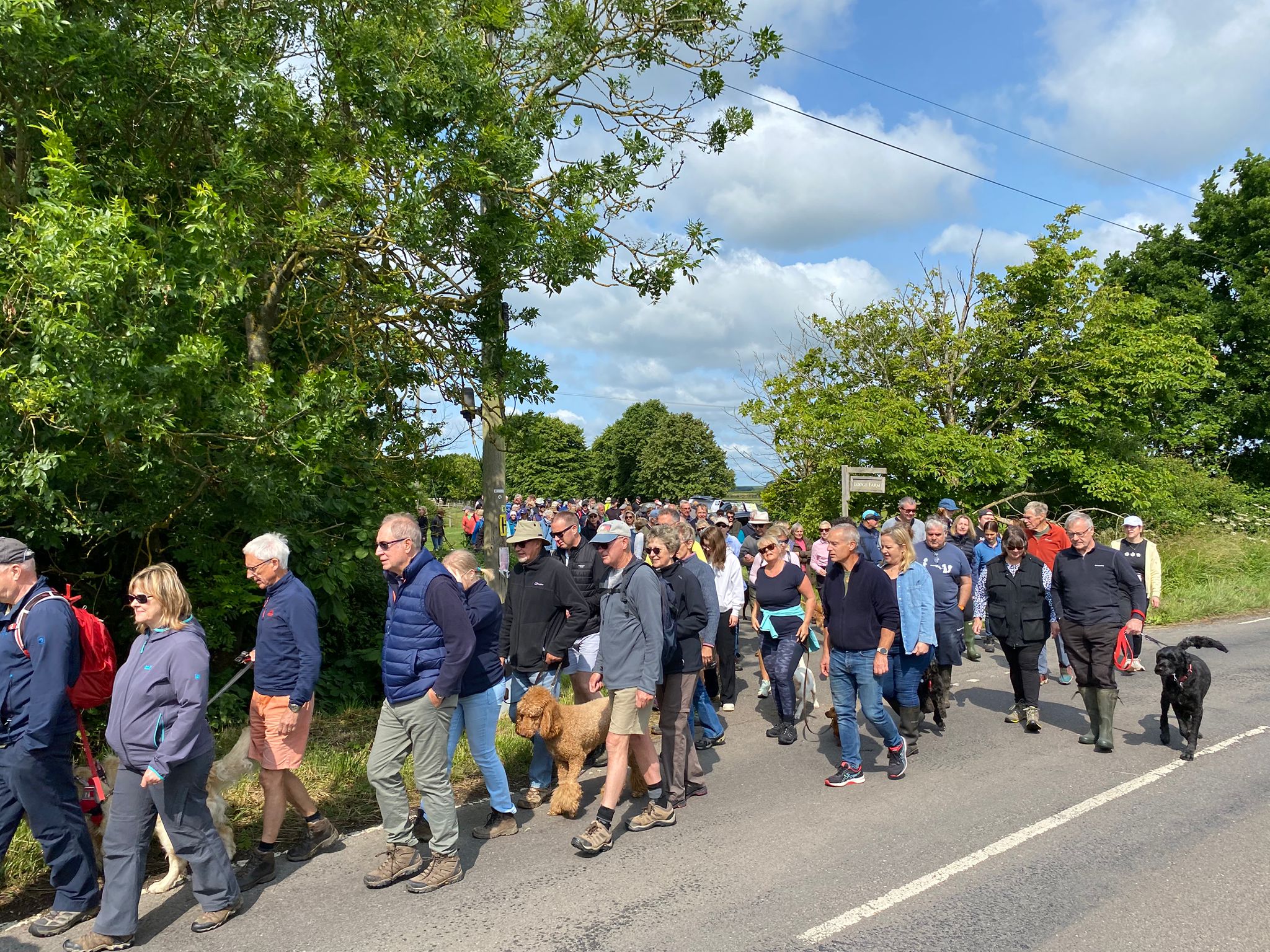
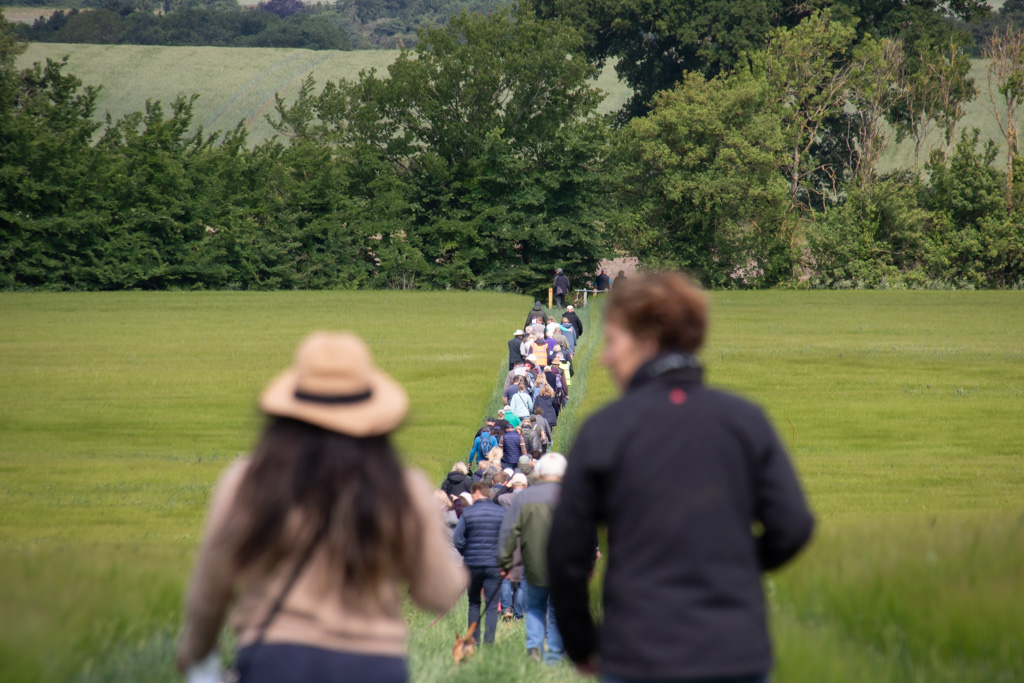
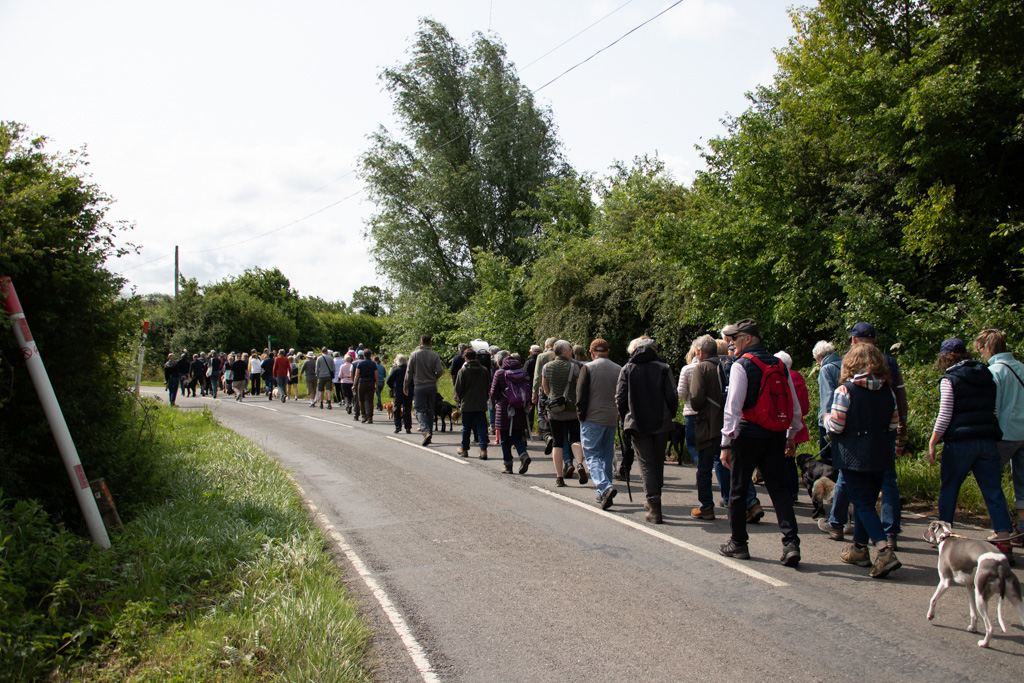
Hundreds joined the Community Walk around a small section of the proposed East Park site. Richard Fuller MP said: “This is not a solar ‘farm’ – it would be an industrial facility” Photos courtesy Sarah Sims, Roy Palmer
The shocking truth about UK solar: the numbers don’t add up
26 May 2025 Solar tech in the UK climate struggles to deliver power above 10% of its capacity. According to the latest Department for Energy Security and Net Zero data, for the last five years UK solar installations averaged only 10.2% power output. For 2024, it was even lower, at an astonishing average output of just 9.9%.
The UK has been ranked by the World Bank as one of the worst countries in the world for solar power. The government’s own figures show that solar is by far the most unproductive of all its renewable energy generators. The data demonstrates beyond doubt that solar power tech does not perform efficiently enough in our cloudy, higher latitude country. Building colossal solar facilities like East Park on fertile farmland simply does not make sense and cannot be justified.
The government’s data shows that in reality, there is a yawning gap between East Park’s 400MW ‘nameplate’ capacity and the amount of electricity it would actually be capable of producing. The scheme’s 700,000 photovoltaic panels, with a combined capacity of 400MW, would generate only 40.8MW of power on average across a typical year. If the enormous solar facility had been up and running on the 1,900 acres of farmland spanning the Bedfordshire and Cambridgeshire border last year, the average would have been even lower, at just 39.6MW.
The stark reality of just how badly solar power performs in the UK climate has been revealed by a new analysis and policy briefing. Called ‘The reality of low power UK solar: the numbers don’t stack up’, it has been released by the UK Solar Alliance, the national network of community groups concerned about the impact of ground-mounted solar on farmland around their homes and villages.
The new analysis suggests that developers like the investor-backed business behind East Park are flooding fields with cheap solar panels in massive numbers to make up for the poor solar yields in the UK climate. The panels are so cheap because most are imported from China, which has well established issues with forced labour in its solar infrastructure product supply chain, particularly so-called ‘blood panels’. As we reported last month, the East Park developer has already told local residents its hundreds of thousands of panels would be ‘Made in China’ and even gave an example of the panels they would import – from Canadian Solar, one of the companies widely associated with the slave labour accusations.
Other headline findings from the new report are:
- Last year, the UK’s national solar power fleet of 17.8GW generated an average of just 1.77GW
- If the UK hits its enormous 47GW 2030 solar target, then it’s likely that the entire range of solar installations built at that stage would only contribute 12.8% to the UK’s annual electricity supply – but with serious intermittency issues
- If all the current NSIP-scale schemes like East Park Energy are approved and added to the small scale schemes already in operation, we would see 163,000 acres of UK farmland lost to poor-performing solar power – that’s an area the size of Merseyside, or 800 traditional farms
- Worryingly, if the government’s ‘fields first’ push continues in the rush to reach the 2030 target, it would amount to solar infrastructure covering some 235,000 acres, which is 2% of UK cropland – but concentrated in just a few key regions, impacting agricultural productivity in those areas
- The industry-grade battery banks that will sit in compounds alongside super solar schemes like East Park come with serious safety and environmental risks – a big explosion and fire at a battery facility in California earlier this year resulted in local people over a wide area suffering acute symptoms like chest tightness and nose bleeds, and soil contamination from as far away as five miles. There have already been three fires at UK battery storage sites this year
Read headlines from the new UKSA report, or the full briefing.
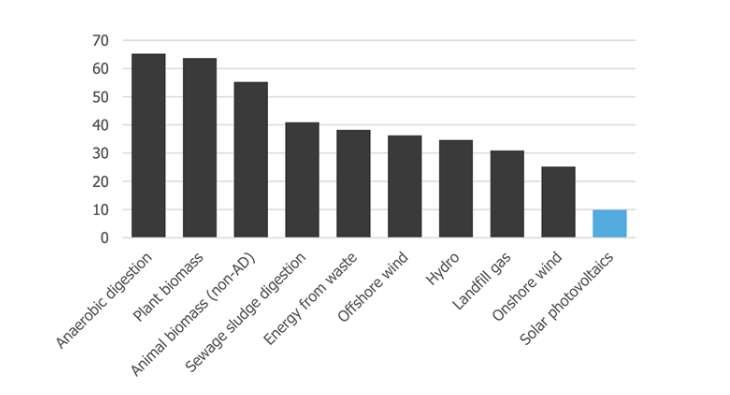
Solar power comes last for performance in DESNZ’s list of renewable energy generators: data from DESNZ Energy Trends: UK renewables – 2024 load factors (% of time energy generators work at installed capacity)
Where are East Park’s 700,000 solar panels coming from?
24 April 2025 As news emerges that solar panels associated with “slavery” in China will not be used in GB Energy projects, the Stop East Park Energy campaign is asking if and when this policy will be extended to cover the millions of imports being procured by private developers in the UK’s multibillion pound ground-mounted solar sector. Solar panels made using forced labour have been dubbed ‘blood panels’ by campaigners concerned with potential human rights abuses.
In a major policy reversal, energy minister Ed Miliband has just announced that he will introduce an amendment to legislation that will force state-owned GB Energy to ensure “slavery and human trafficking is not taking place” in its supply chain.
The amendment will mean that all solar panels, wind turbines and batteries used in GB Energy projects must not contain materials suspected to have been produced through slave labour. China dominates global solar panel production, accounting for roughly 80% of the world’s solar panels. Much of the world’s supply of polysilicon comes from the Xinjiang region, where there are suspected human rights abuses of the Uyghur population. Polysilicon is the key raw material in solar photovoltaic panels.
The news that the government has now changed policy on forced labour in the renewables supply chain for its own state-funded schemes is welcome. But where does this leave the multimillions of solar panels – many cheap exports from China – heading for the countless commercial solar proposals planned for across the UK?
So far, the government investment vehicle GB Energy has only announced that it will be supplying solar panel rooftop systems to a number of schools and NHS sites.
The private developer ground-mounted solar power sector is getting ready to install millions of solar panels in vast land-intensive schemes. There are currently nearly 60 projects in the national planning systems alone, targeting well over 110,000 acres of farmland with solar panels. These solar ‘super schemes’ use panel quantities ranging from 500,000 to well in excess of a million per scheme. There are yet more ground-mounted schemes going through local authority planning systems. Government ministers have put in place a strong policy framework to heavily encourage these private developers to build ground-mounted solar schemes – reinforced by unequivocal ‘clean energy’ rhetoric. When will the government be extending its new legislative protection for solar in the state-owned sector to cover solar infrastructure procurement in the private energy development sector too, to avoid the inevitable two tier policy?
Brockwell Storage and Solar, the developer behind the East Park Energy project, has already confirmed it would be procuring solar panels from China when asked by local people during the statutory consultations in the villages that would be living in the shadow of the solar scheme. And in response to an email from at least one local resident requesting technical information on the 700,000 solar panels that would make up the scheme, one of the developer’s technical specialists sent a detailed solar panel datasheet from Canadian Solar, describing it as “indicative”. Canadian Solar has faced scrutiny regarding its supply chains and potential links to forced labour, particularly in China’s Xinjiang region. In the past, the US government has seized shipments of solar panels from Canadian Solar because of their connection to potential Uyghur forced labour.
The East Park Energy developer has already confirmed it will be purchasing solar panels from China – and referred to a technical datasheet from a supplier which has faced scrutiny over forced labour links
Developer preparing final details for solar application
22 April 2025 Many residents will have spotted activity in the fields around local villages – it is all part of the preparation work that the developer behind East Park Energy is doing before it submits its full application to the Planning Inspectorate.
The solar facility proposal is on a vast scale, covering 1,900 acres of farmland. It’s bigger than Gatwick Airport, four times the size of the new Universal theme park coming to Bedford, or 34 times bigger than the nearby Grafham Water solar site. It spans the Bedfordshire and Cambridgeshire border, and would be built close to a string of villages in a six mile corridor. The planning application is due to be submitted any time from 1 July.
The developer, Brockwell Storage and Solar, has commissioned experts to carry out trial strip trenching in the fields it is targeting for solar panels, to validate the archaeological geophysical survey that was made as part of its early work on the project. The current work follows on from the exciting find of the remains of a significant Roman town close to Great Staughton, and is presumed to be aiming to rule out any associated historical evidence.
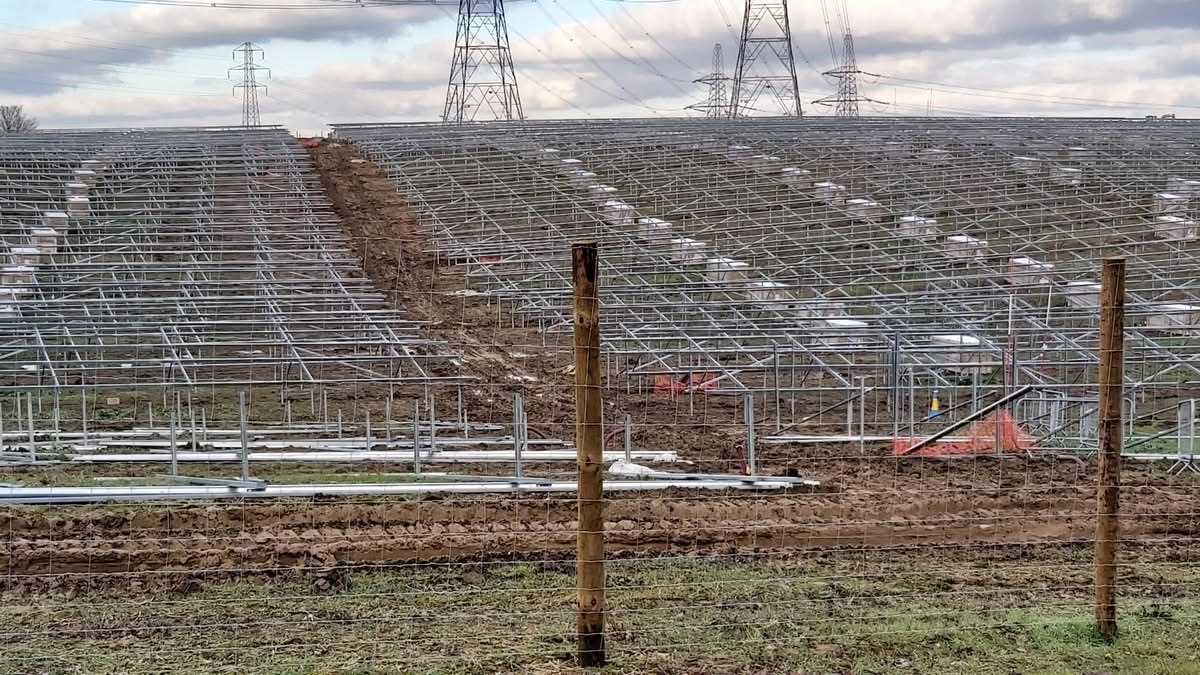
Contrary to popular belief, solar developments are complex infrastructure projects and all the fields earmarked in the East Park plan would see lengthy construction work, including concrete foundations to support rank after rank of solar panel ‘tables’. If the East Park solar plant plan gets the go ahead, it would take around three years to build, bringing disruption, noise and dust to the area – hundreds of site workers into the local community, and thousands of HGV movements on narrow rural roads, and the busy B645. The 700,000 panels would be installed using noisy, repetitive pile-driving techniques.
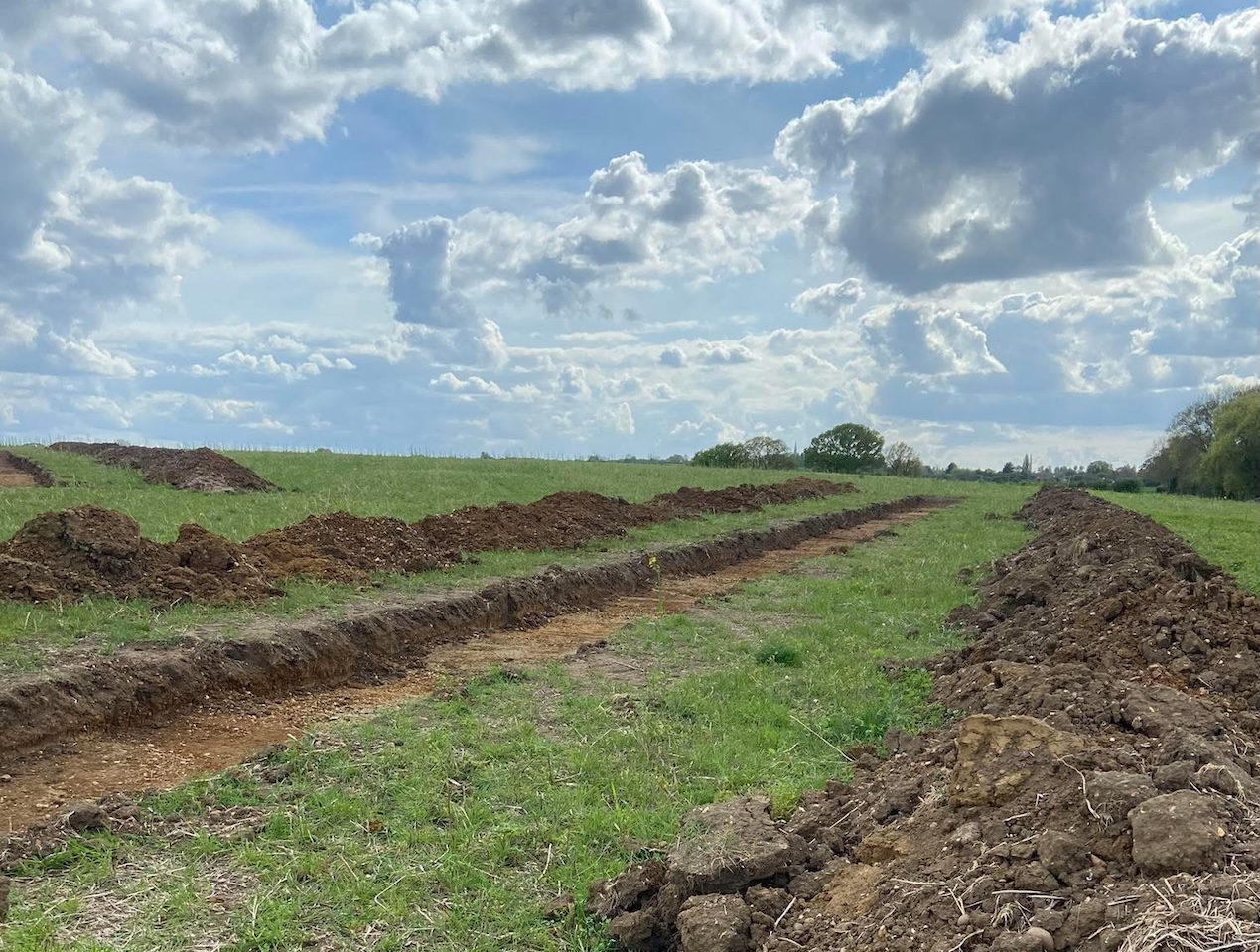
Trial archaeological trenching on fields targeted by Brockwell for the East Park solar facility
Solar in the UK: shocking facts exposed at MP event
14 March 2025 MPs at a Westminster roundtable on large scale solar schemes on agricultural land heard a series of astonishing revelations from the University of Oxford’s Professor David Rogers. In a presentation exploring the flaws with ground solar in the UK, he revealed that:
- Six single offshore wind turbines could produce as much power as a 1,900 acre, 400MW solar scheme like East Park
- In the UK climate, solar is very inefficient – panels have a ‘load factor’, or efficiency rating, of under 11 per cent
- Solar is one of the ‘dirtiest’ of all renewables, based on its carbon-heavy lifecycle. Only biomass burning is a more polluting energy source – and it is often not considered ‘renewable’. By opting to roll out mass ground solar, the UK is offshoring its carbon footprint
- The UK is already importing around 46% of its food – food yields have dropped while the population has grown – yet solar developers are disproportionately targeting good farmland to cover with photovoltaic panels
- 80 per cent of the world’s solar panels are made in China – and even though many are manufactured using forced labour, they are still imported into the UK. The US and EU have already banned panels and other components where ethical sourcing can’t be guaranteed
The roundtable, held earlier this week, was hosted by Roz Savage MP. A massive solar site covering fields tot
Dr Catherine Judkins of the UKSA also spoke at the roundtable, detailing the well-documented fire and explosion risks with the giant battery energy storage facilities that sit alongside every NSIP solar scheme. She warned: “It is obvious that the technology is ahead of the government’s ability to regulate it and private industry’s ability to control it”.
Safety is not the only issue with the battery banks. Depending on the season, the developers behind NSIP super schemes will be planning to use their on-site battery installations to store any spare energy generated by the photovoltaic panels during a narrow range of daylight hours. Developers then hold back the energy until it’s needed in the evening or at night – and its price is higher – before releasing it to the grid. But it is a common myth that the battery banks can store energy for long periods – East Park’s 100MW battery array, consisting of 20 to 30 shipping container-sized units, would only supply power to its target 108,000 houses for 30 minutes.
All the MPs at the event called for policies to encourage adding solar panels to housing developments and new buildings, including warehouse rooftops, brownfield sites, car parks and transport corridors.
Roger Gale, MP for Herne Bay and Sandwich, voiced his concerns over prioritising solar on farmland, and the likelihood that it would not be returned to productive agricultural use: “We are throwing away something that will never come back.”
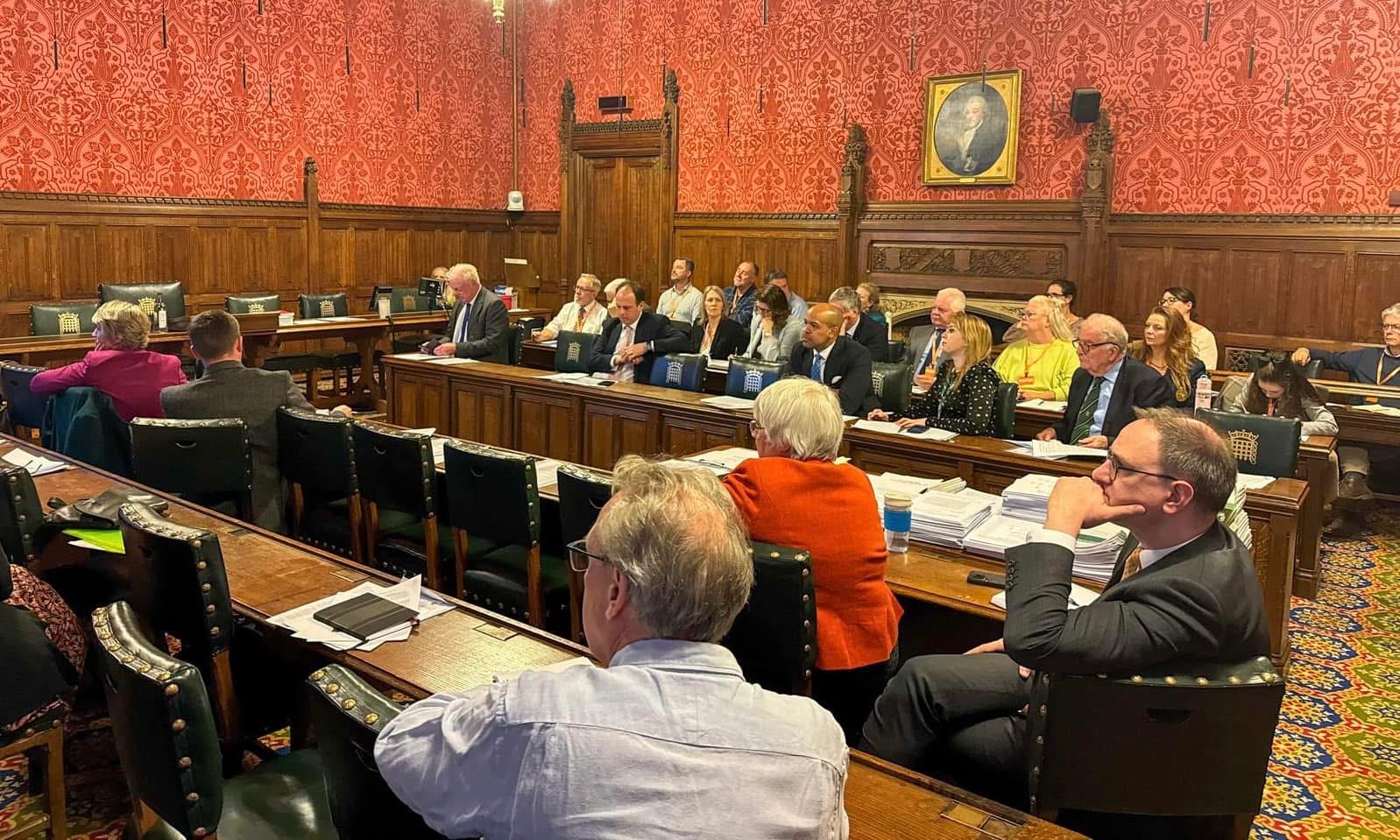
The event at the Houses of Parliament covered the many issues relating to the vast, foreign-owned solar plant plans targeting prime agricultural land Image courtesy Ben Obese-Jecty MP
Over 1,000 locals sign Parliamentary petition to stop East Park
8 March 2025 Huntingdon MP Ben Obese-Jecty’s petition to call a halt to the East Park Energy application attracted the support of 1,100 local people – a clear signal from the community that the massive solar plant plan is not welcome.
The backing of more than 1,000 residents for the online petition is remarkable given the small size of local villages.
Ben presented his petition in the House of Commons earlier this week.
Introducing the petition, he said that it was on behalf of residents in his own constituency and those of his neighbouring MP Richard Fuller, warning that they would all be impacted by the scheme proposed by the developer Brockwell Storage and Solar: “At 1,900 acres, it would be bigger than Gatwick Airport.”
He added that the developer wants the scheme to be “built on farmland, 74 per cent of which is graded as ‘best and most versatile’, Grade 2 and Grade 3a” and that the project “stands to have a significant impact on local life as 700,000 photovoltaic panels would be installed on 250,000 pile-driven metal posts” during the three-year build.
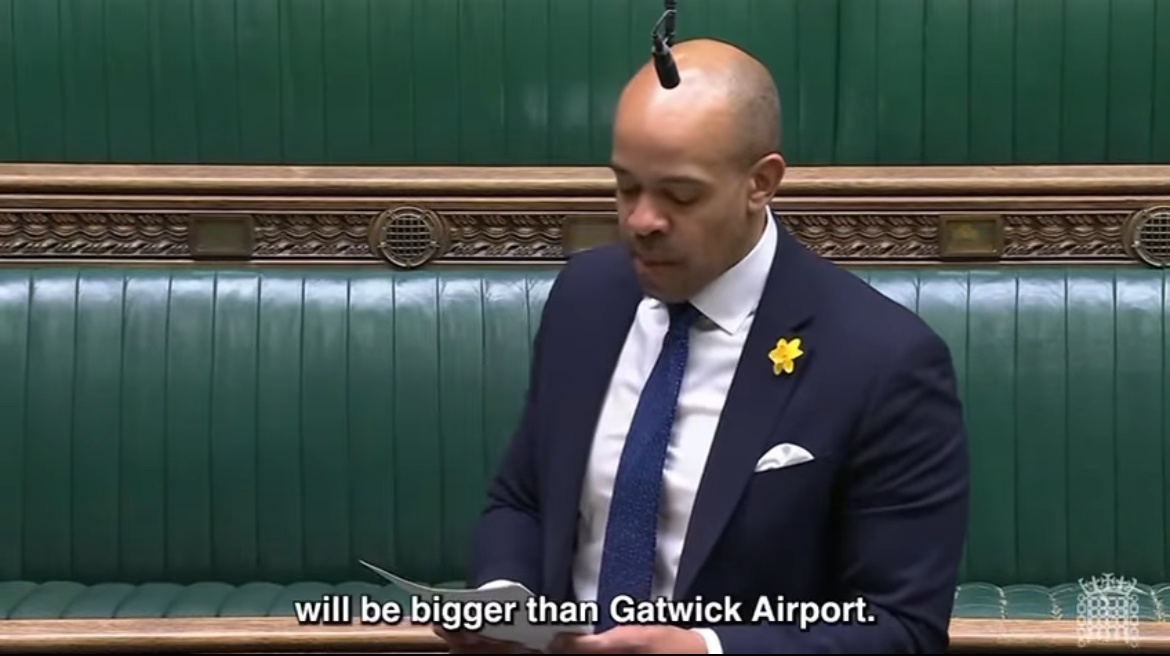
“Local residents feel that their voice in opposition to the scale of this project being foisted on them has not been heard, with the government unprepared to listen to them” Image courtesy Ben Obese-Jecty MP
‘Far too large, far too much farmland’
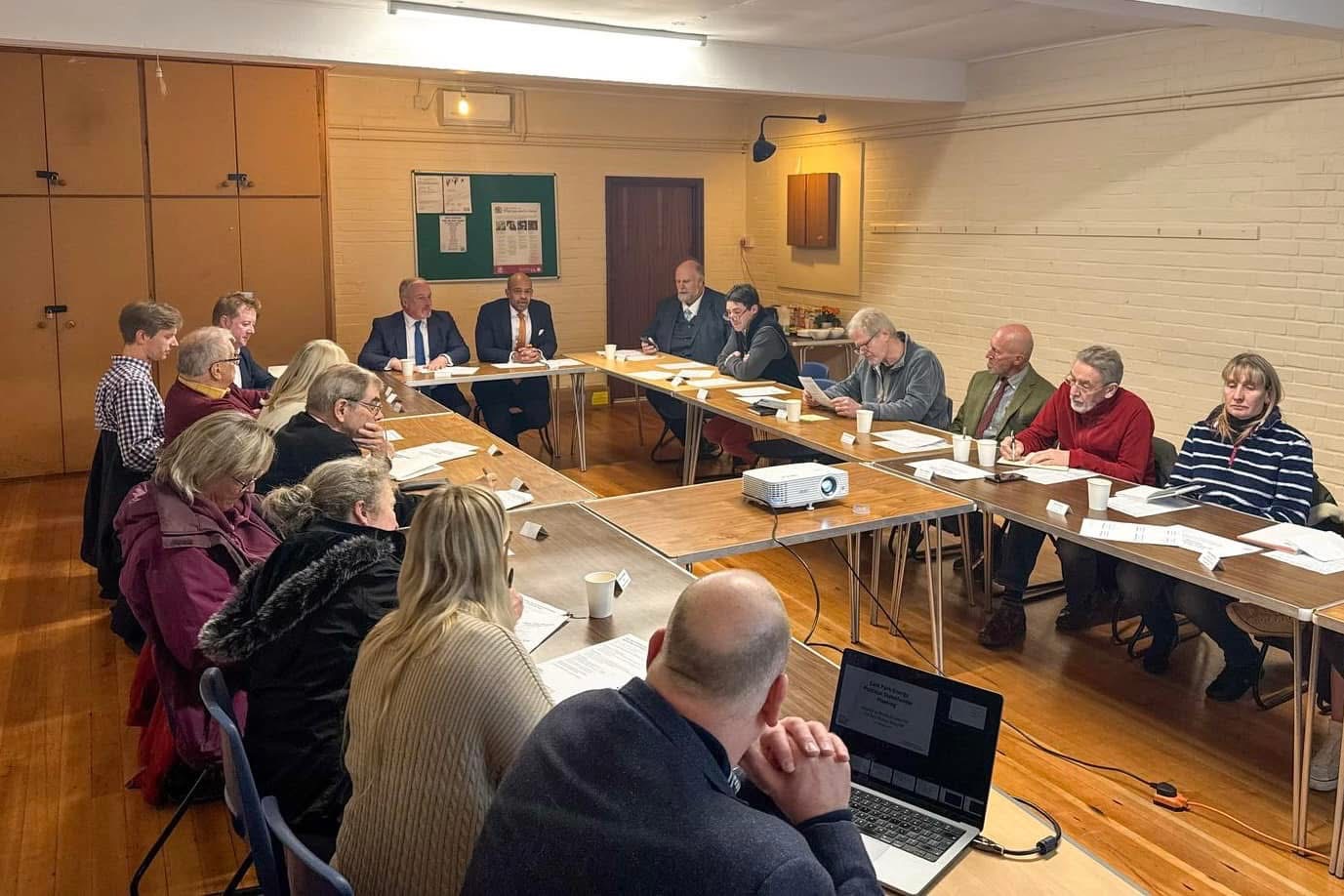
1 March 2025 Ben Obese-Jecty MP and Richard Fuller MP last night co-chaired a meeting of local political stakeholders to discuss the East Park application and how they can oppose the scheme.
The meeting, in Great Staughton, was hosted by members of the Stop East Park Energy team and brought together more than 20 people involved in key local roles. The event was scheduled as part of the preparation for the next stage in the NSIP planning process.
Richard Fuller opened the meeting by reminding invitees that the East Park scheme is on a massive scale and targets high grade agricultural land: “The scheme is far too large, and takes up far too much farmland”. He added: “Everyone has to get involved to oppose the plan.” Ben Obese-Jecty commented on the risks of taking out 1,900 acres of productive land for a form of intermittent renewable energy that could quickly become technically obsolete, leaving a ‘rustbelt legacy’: “Look at how quickly phones and devices have evolved in just a few short years – how do we know this technology will not be the same?”
During the presentation by Stop East Park Energy, the team explained that East Park is one of a new breed of colossal NSIP super schemes. None of these has yet been built in the UK. Only one, Cleve Hill in Kent, is nearing completion, but at 900 acres it is dwarfed by the new schemes in the pipeline – typically sized 2,000 acres each or more.
The Huntingdon and North Bedfordshire MPs were joined by Bedford Borough Council Mayor Tom Wootton, Paul Bristow, former MP and current Conservative Candidate for Mayor of Cambridgeshire and Peterborough, a representative for the Council leader of Cambridgeshire County Council, a number of district and borough councillors and chairs or councillors from seven affected parish councils.
The meeting was an opportunity to detail the many problems with the East Park plan, and explain the Nationally Significant Infrastructure Project process and how stakeholders can register as ‘interested parties’ and submit their concerns about the proposals to the Planning Inspectorate.
Several guests at the meeting were shocked to learn that East Park would be 34 times bigger than Anglian Water’s Grafham Water solar site – a familiar sight to locals. Image courtesy Ben Obese-Jecty MP
MP petition calls for halt to East Park plan
14 February 2025 Huntingdon MP Ben Obese-Jecty has recently launched a petition calling for the cancellation of the flawed East Park Energy scheme, targeting high grade farmland for a six mile stretch across the Bedfordshire and Cambridgeshire border.
The petition is open to all to sign on his website.
The new petition is part of Ben Obese-Jecty and Richard Fuller MP’s opposition to the East Park mega solar facility which they continue to criticise, describing it as on an “excessive” scale which would cause long term damage to valuable Grade 2 and Grade 3a farmland, and “more about financial speculation than anything else”.
Stop East Park Energy is currently preparing for the most critical stages of the East Park Energy solar application. The final plan is currently due to be submitted to the national Planning Inspectorate this quarter.
The UK has never seen a solar facility on this enormous scale before. East Park is set to industrialise the countryside around a string of villages in a three-year construction programme, bringing noise, disruption and disturbance to everyone in the shadow of the site and beyond. If the super scheme gains consent, it would have a huge impact on the local community:
- 7,200 traffic movements – 1,400 artic trucks just to deliver the panels
- up to 850 construction workers – at peak times, potentially as many as 10,200 traffic movements a week just for the workforce
- 700,000 photovoltaic panels mounted on around 250,000 pile-driven metal posts
- 40 miles of mesh fencing and around 12,000 metal fence posts
- 1,900 acres of high grade, 74 per cent BMV farmland switched to ‘part time’ power production – in England, the maximum solar output capacity is 11%, and it drops over 80% in the winter
- a 100MW lithium-ion battery energy storage system consisting of 20 to 30 container-sized, water-cooled batteries
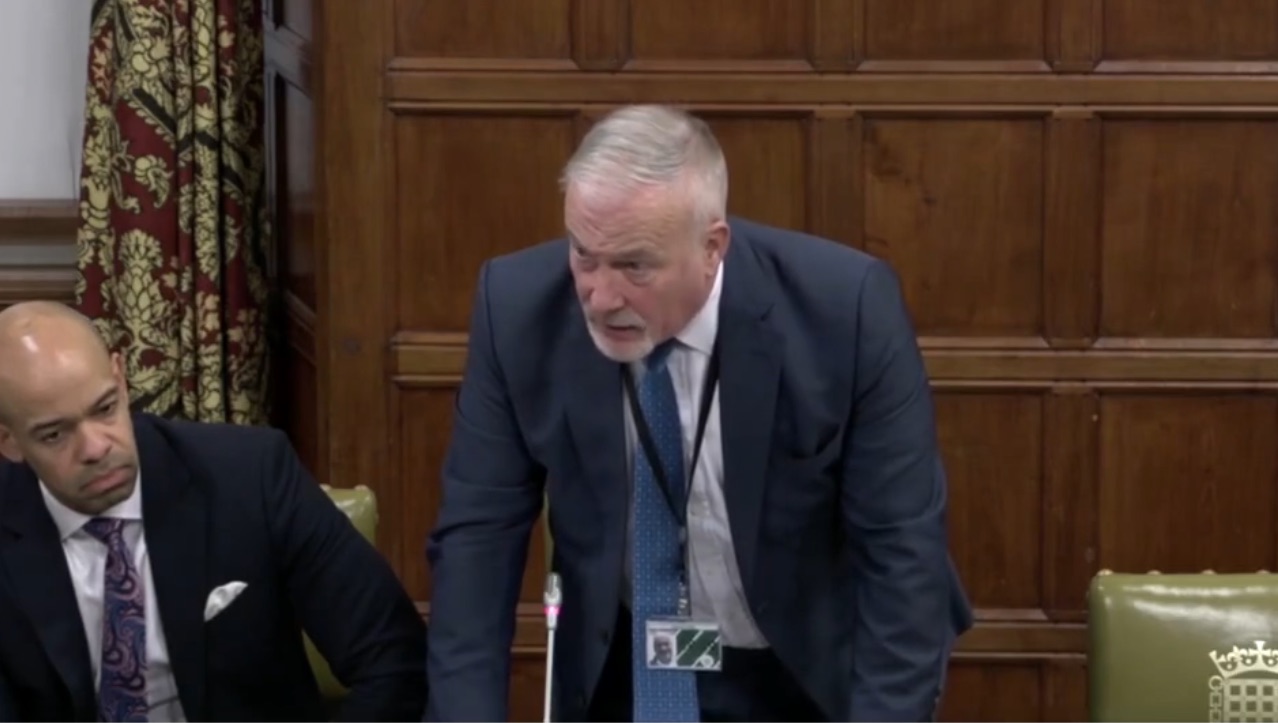
Ben Obese-Jecty MP and Richard Fuller MP at a recent Westminster debate. The North Bedfordshire MP said: “We share significant concerns about the East Park Energy solar ‘farm’ proposal which will be a massive blight on the countryside of North Bedfordshire and sprawls over the border into Huntingdonshire”
Chance to make new build solar mandatory
03 January 2025 Stop East Park Energy is calling on our two local MPs to back a new law which would ensure all new homes are built with solar panels as standard.
Named the New Homes (Solar Generation) Bill but known as the ‘Sunshine Bill’, this important new piece of legislation has been brought forward as a private member’s bill by Max Wilkinson, the Liberal Democrat MP for Cheltenham. Last year, following pressure from the housebuilding sector, the current government ruled out making solar panels mandatory for new builds, opting to “encourage” rooftop solar installations instead.
The bill is due for its Second Reading on 17 January. Countryside charity the CPRE is supporting the move – find out more here.
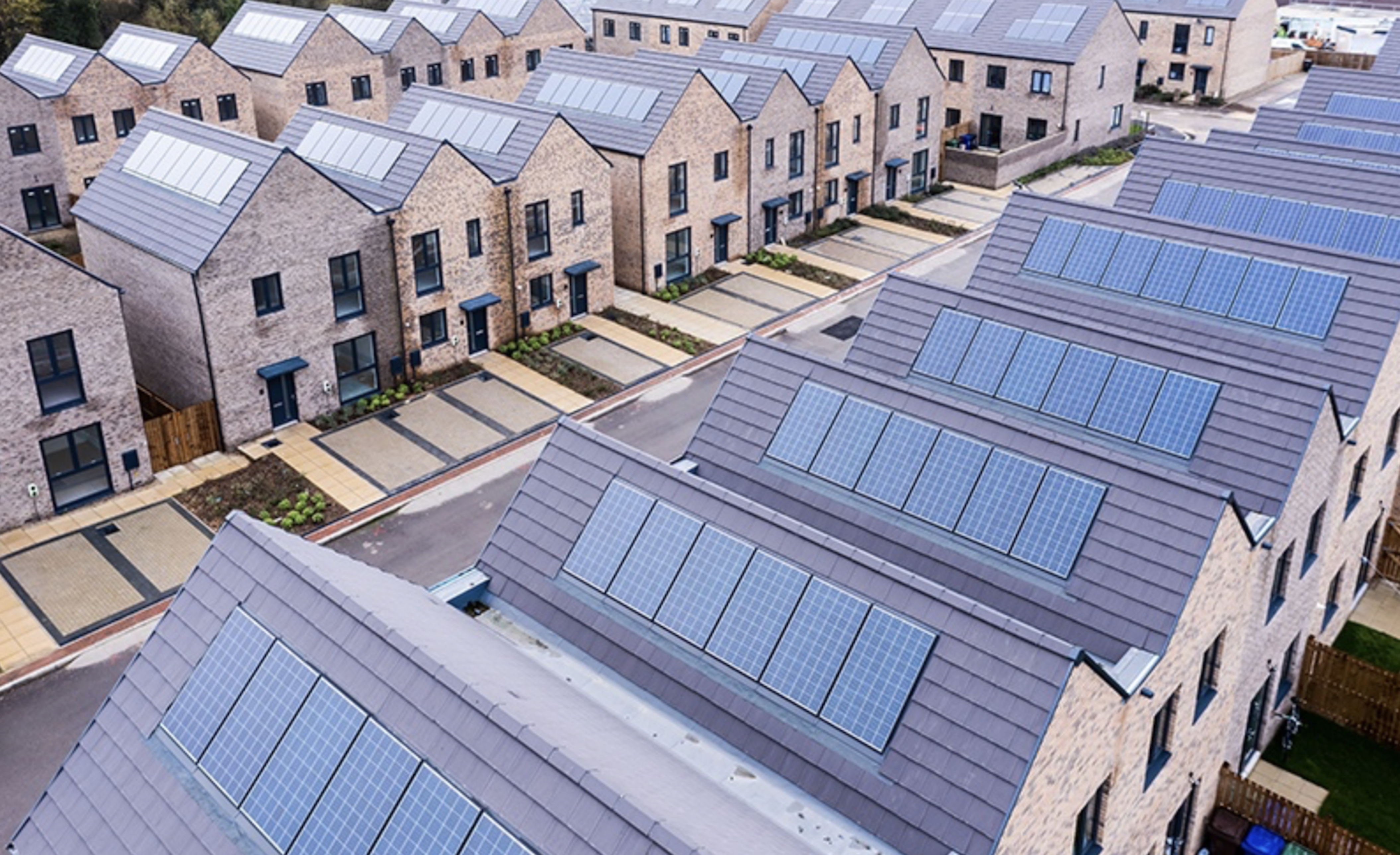
A new bill introduced by a backbench Liberal Democrat MP seeks to make solar panels on all new houses mandatory
“Completely lacks credibility”: CPRE on developer’s claim that solar plant can protect landscape character
18 November 2024 CPRE Bedfordshire has today released its response to Brockwell Storage and Solar’s statutory consultation, setting out its opposition to the “massive scale development” and continuing its support for Stop East Park Energy.
In its formal response, CPRE Bedfordshire makes it clear that despite its stance as a strong advocate for the generation of electricity through solar PV systems, it is against the East Park scheme.
Scale is an obvious issue for CPRE, as it refers to “a massive 700,000 panels” and a site “the size of 1,000 football pitches”. It focuses its objections on:
- the impact on landscape and rural communities
- the loss of high quality agricultural land and food security
- the opportunities for solar on rooftops to provide a better alternative means to generate renewable energy
CPRE says that: “The impact of the scheme would be to completely transform the area from its historic and current largely agricultural character to an industrial complex across a 6 mile corridor covering 1,900 acres.” It adds that: “The impact on local communities across the area will be immense … The suggestion by the developer that it could be constructed in a way that protects landscape character through careful siting and screening completely lacks credibility.”
Referring to the nearly 75 per cent of the land identified for the development classified as Best and Most Versatile agricultural land, the response also states that the proposal is outside government policy and the policies of Local Plan 2030, concluding “It should be refused on these grounds alone.”
CPRE: “The suggestion by the developer that [East Park] could be constructed in a way that protects landscape character through careful siting and screening completely lacks credibility”
Campaign publishes open letter to developer as statutory consultation closes
30 October 2024 The formal statutory consultation period for East Park Energy closed yesterday. Thanks go to the hundreds of people across the community – and beyond – who took the time to set out their serious concerns with this flawed, over-scaled scheme targeting prime Bedfordshire and Cambridgeshire arable farmland. Campaign supporters have been sharing their objections and an open letter to the developer setting out the numerous issues with the 1,900 acre mega solar plant and its far-reaching impacts is published today.
The letter, titled ‘Counting the costs to our rural community’, makes it clear that the scheme is “the right energy in the wrong place” and references the plan’s many flaws, from its impact on the rural landscape through to making flood risks worse. Three quarters of the scheme targets Best and Most Versatile land, and the needless industrialisation of this ‘good’ and ‘very good’ quality land is the top issue for many people. The farmland has the capacity to produce enough wheat for nearly 3.6 million loaves a year.
The consultation process itself is called out in the letter to the Brockwell directors:
“Your statutory consultation was just a tickbox exercise. You and your representatives did not even try to claim that the consultation process counted. You took no notes of what we said. The fact that you hired a security guard for your sessions tells us everything we need to know about how much faith you have in your own plan and its suitability for this location.”
“It is difficult for us to understand why you have designed your scheme so close to people’s homes and running right up to and around villages” – open letter to the East Park developer
Local residents urged to join community meeting called for 24 October
18 October 2024 A meeting for all the villages impacted by the East Park scheme has been organised for Thursday 24 October, starting at 6.30pm at Little Staughton Village Hall.
With the developer’s statutory consultation sessions due to finish on 22 October, this is a chance to bring all the local communities together to get to grips with the grim realities of this massive solar installation.
The format for the event will be:
- 6.30pm – an opportunity to discuss individual concerns
- 7.30pm – a presentation focusing on all the key issues for local villages
- 8pm – panel Q&A
Everyone must object to East Park Energy by Tuesday 29 October. Raising points at the consultation sessions organised by the developer is not enough.
Send objections via email or by filling out the online form. Go to eastparkenergy.co.uk/find-out-more
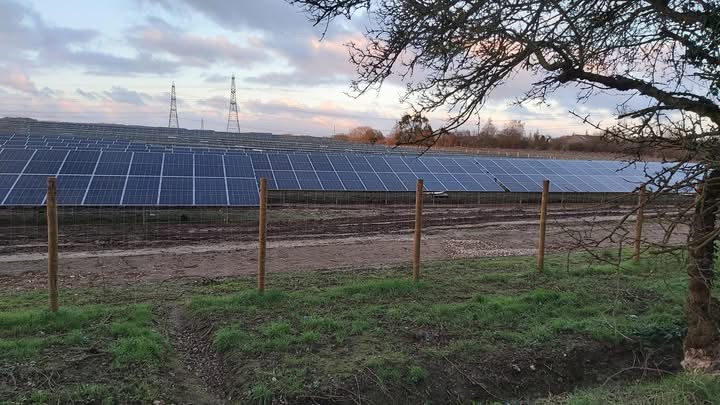
East Park will take three years to construct. Concerned residents are urged to join the community meeting at Little Staughton Village Hall on 24 October – the event is for everyone in all the villages affected
Criminal gangs targeting large solar sites – cable thefts on track to double this year
10 October 2024 Latest figures show that cable thefts from utility scale ground-mounted solar sites have increased significantly. According to Opal, the national intelligence police unit specialising in serious organised acquisitive crime, by August this year, there had already been more cable thefts than the total number recorded in either 2022 or 2023. If thefts continue at the same rate for the rest of this year, the total number would be 62 – 105% up on 2022.
Thefts of both solar panels and cables together are also rising and are on target to increase by 32% this year, compared to 2022.
Solar energy ‘farms’ house millions of pounds worth of equipment. Criminals are attracted to these often rural sites by the value of metals such as copper and the high numbers of panels, as well as other plant and equipment.
Alongside thefts, Opal records attempted thefts, which typically involve what the unit describes as when sites are under “hostile surveillance” by criminal gangs, or suspicious vehicles are intercepted. Owners of solar sites targeted by gangs often have to install more lighting, CCTV towers and heavier duty fencing.
These serious organised crime figures, released to Stop East Park Energy, are troubling, especially given low levels of rural policing – and the fact that they are likely to keep rising with the increasing number of mega solar schemes being approved for construction in wide, open farmland locations.
A local resident said: “This is a major concern – if East Park gets the go ahead it’s more likely that criminal gangs will be active in our remote corner of countryside. At best, this huge jump in serious criminal activity will mean that sites like East Park could become even more industrialised with extra security measures, more robust fencing and nightly patrols. And of course at worst, it means criminal gangs are targeting large scale construction and operational sites and compounds right on our doorsteps.”
Thieves are not just striking completed schemes – one resident living near a solar site under construction in the Midlands said that panel deliveries arriving on site on HGVs via the docks in Southampton were being stolen faster than they could be installed.

Security measures are likely to increase following the huge increase in solar site thefts. Image: Safeguard Systems
“How does industrialising the countryside save the planet?” – supporters share their views
7 October 2024 During the statutory consultation period, more and more people have signed up to support the Stop East Park Energy campaign. Here are just some of the comments campaign supporters have made:
- “The fact that the developer says this will take three years to build using up to 850 workers a day, and more than 7,000 deliveries, says it all – it’s highly industrial, it’s a nonsense to describe it as temporary, and the environmental impact of the materials and development alone means it should be stopped”
- “I am very much in favour of clean energy, but not at the expense of the land”
- “Solar should be completely banned on farmland. There is no case for it. Solar should only be allowed on rooftops, car parks and brownfield sites”
- “This would be a blight on the landscape”
Read a selection of more campaign supporter comments here.
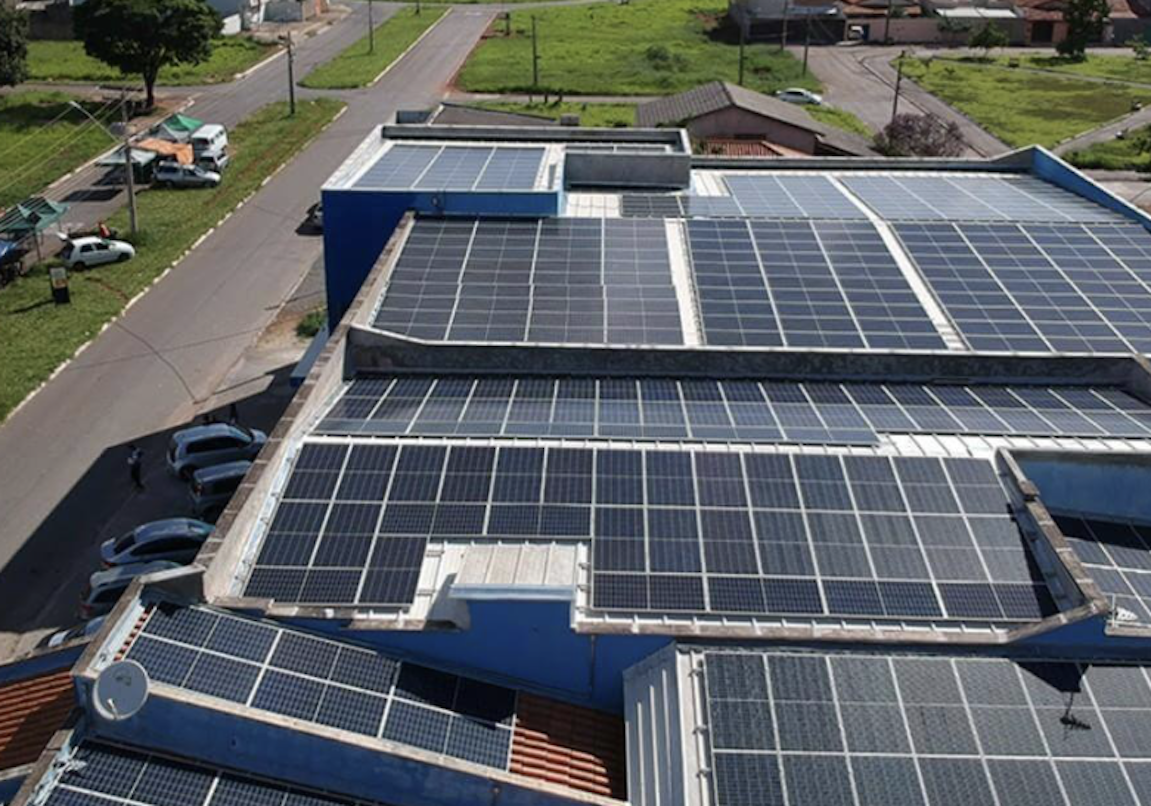
A supermarket in Brazil hosts solar despite its complex roof layout. Many Stop East Park Energy supporters ask why more solar panels are not being put on rooftops in the UK, instead of industrialising farmland
Troubling details in new plans – first consultation on 1 October
29 September 2024 The developer’s statutory consultation period is now underway. There will be five consultation sessions where local people get a chance to ask questions and make their views known to Brockwell, the developer behind the giant solar scheme. The first session is on Tuesday 1 October in Keysoe – session dates and locations are in the news item below. All responses have to be made by 11:59pm on Tuesday 29 October 2024.
Detailed proposals for the four main sites are now at www.eastparkenergy.co.uk. More information has been released on the planned construction phase, including:
- The solar power plant would take around three years to build by a workforce of 500–850 people, working from 8am to 6pm, Monday to Friday, and 8am to 1pm on Saturdays
- The plan includes a new primary access point on the busy B645 between Great Staughton and Hail Weston where the main construction compound would be sited. There would also be some HGV movements on narrow country lanes and local roads around the solar sites. A total of 7,200 deliveries would be made across the construction project
- As well as the disruption, noise, vibration, dust and vehicle and machinery fumes during the build programme, the developer states there would be what it describes as a “reduction in tranquillity”
To get an idea of the destruction and disruption this three year construction phase would cause, have a look at a snapshot of the Cleve Hill solar plant in Kent being built. This NSIP project is less than half the size of East Park Energy.
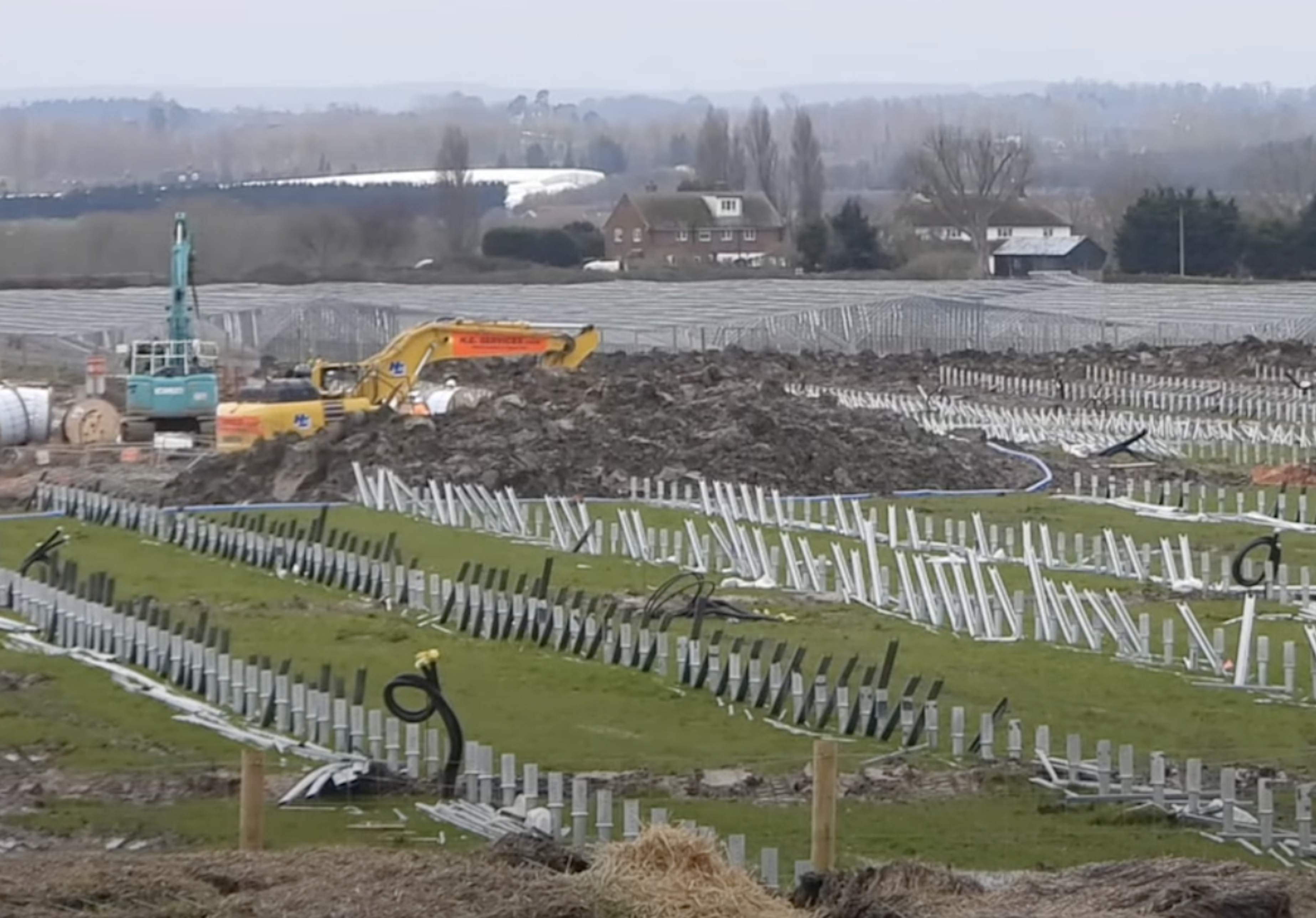
Consultation starting 24 September
22 September 2024 Following confusion caused by conflicting dates on its East Park website, Brockwell is now stating that its statutory consultation will start on Tuesday 24 September.
Consultation sessions at some of the villages which will be alongside or surrounded by this 1,900 acre solar scheme are now confirmed as:
- 1 October Keysoe
- 2 October Little Staughton
- 11 October Hail Weston
- 12 October Great Staughton
- 22 October Pertenhall
Residents should be getting notification from the developer soon. There is widespread concern that little notice has been given of the upcoming consultation period.
Consultation sessions will take place from 1 October in some of the villages which will be impacted by the East Park mega solar scheme
Villagers in Great Staughton welcome news of Roman site
19 September 2024 It was announced this week that the discovery of a small Roman settlement near to Great Staughton has meant that 76 acres will not now be developed as part of the 1,900 acre East Park Energy scheme.
This means that 4 per cent of the original scheme will no longer go ahead. The developer, Brockwell, has had to redesign the scheme to preserve the Roman site which has been given heritage protection as a scheduled monument.
It is not yet clear how this “redesign” will affect the rest of the solar infrastructure application, which stretches from Swineshead to Hail Weston. It is expected that the developer will release details of the reworked plans as part of the short consultation period which is due to start soon. Consultation sessions across the impacted villages are unconfirmed but are currently believed to be:
- 1 October Keysoe & Bolnhurst 12-8pm
- 2 October Little Staughton
- 11 October Hail Weston
- 12 October Great Staughton
- 22 October Pertenhall (non statutory)
Find out more about the new archaeological discovery here.
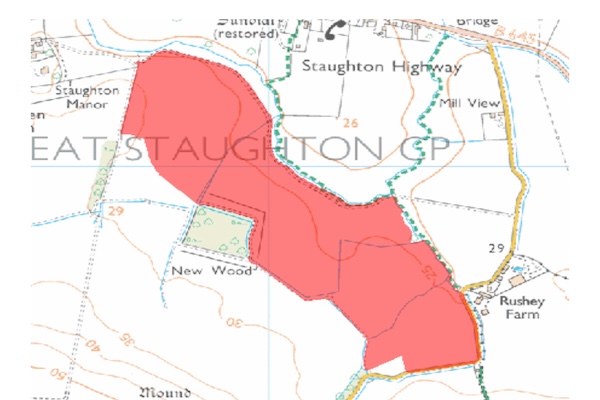
A 76 acre section of farmland near Great Staughton has now been preserved as a scheduled monument. Image: Historic England
New aerial views show the solar corridor planned for local area
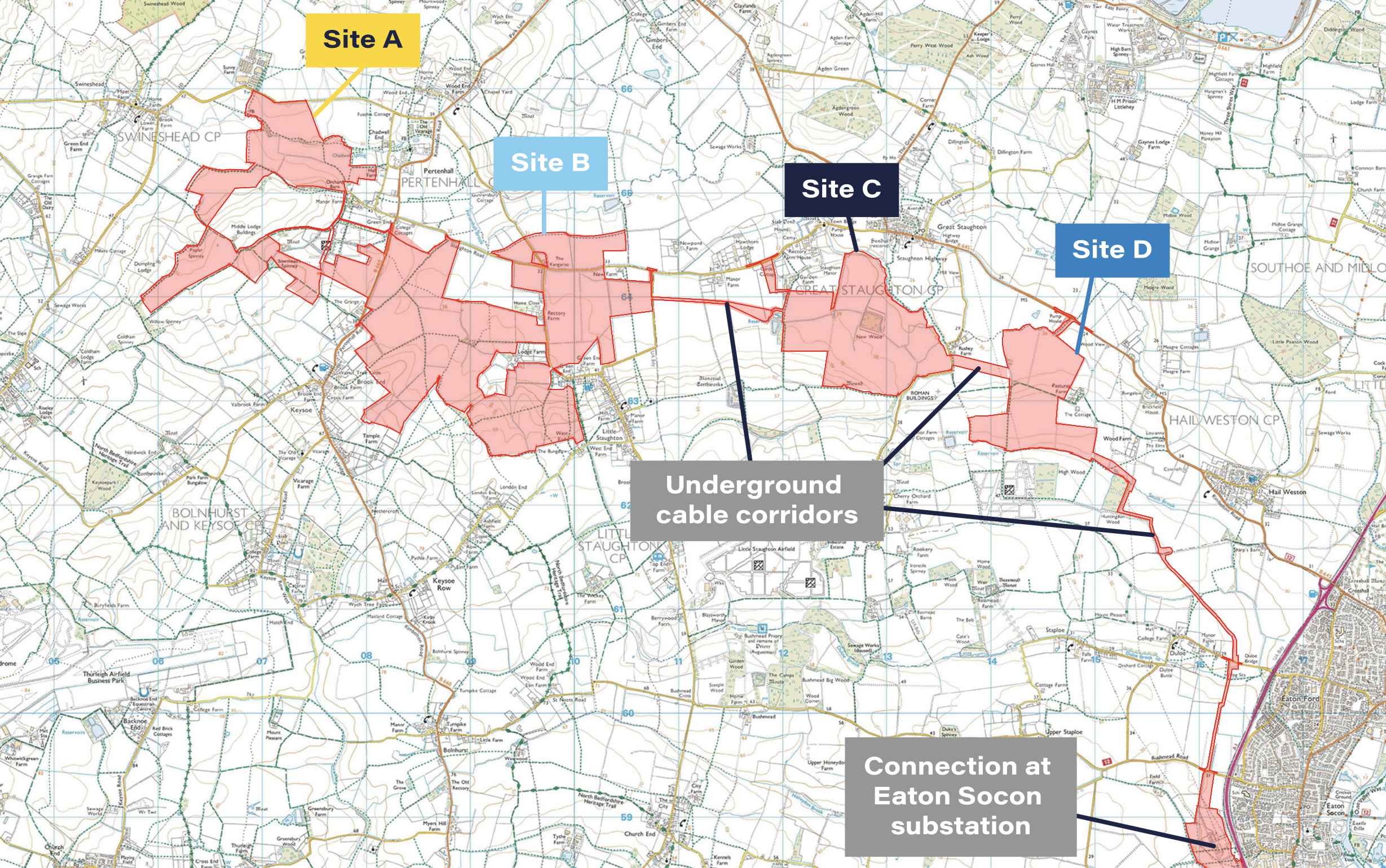
16 September 2024 The full picture of the huge amount of planned solar power generation stretching from Swineshead to Eaton Socon is revealed today with new Google Earth views mapping out the sites.
A new film shows how the current sites, two new solar sites and the East Park Energy super scheme will combine to form a huge solar corridor to connect to the grid. Combined, the schemes will include hundreds of thousands of photovoltaic panels as well as a range of lithium-ion battery energy storage compounds to hold electricity for a few hours at a time.
Local residents will know the solar arrays at Grafham Water, which are included in these views to help compare the scale of the full solar picture. The Grafham Water scheme is designed to generate power used during operations at its own site.
The two smaller scale sites are going through the local authority planning route, and the mega 1,900 acre East Park scheme is already in the Nationally Significant Infrastructure Project planning process, governed by the Planning Inspectorate.
Look at aerial views of the current and planned future sites in detail here.
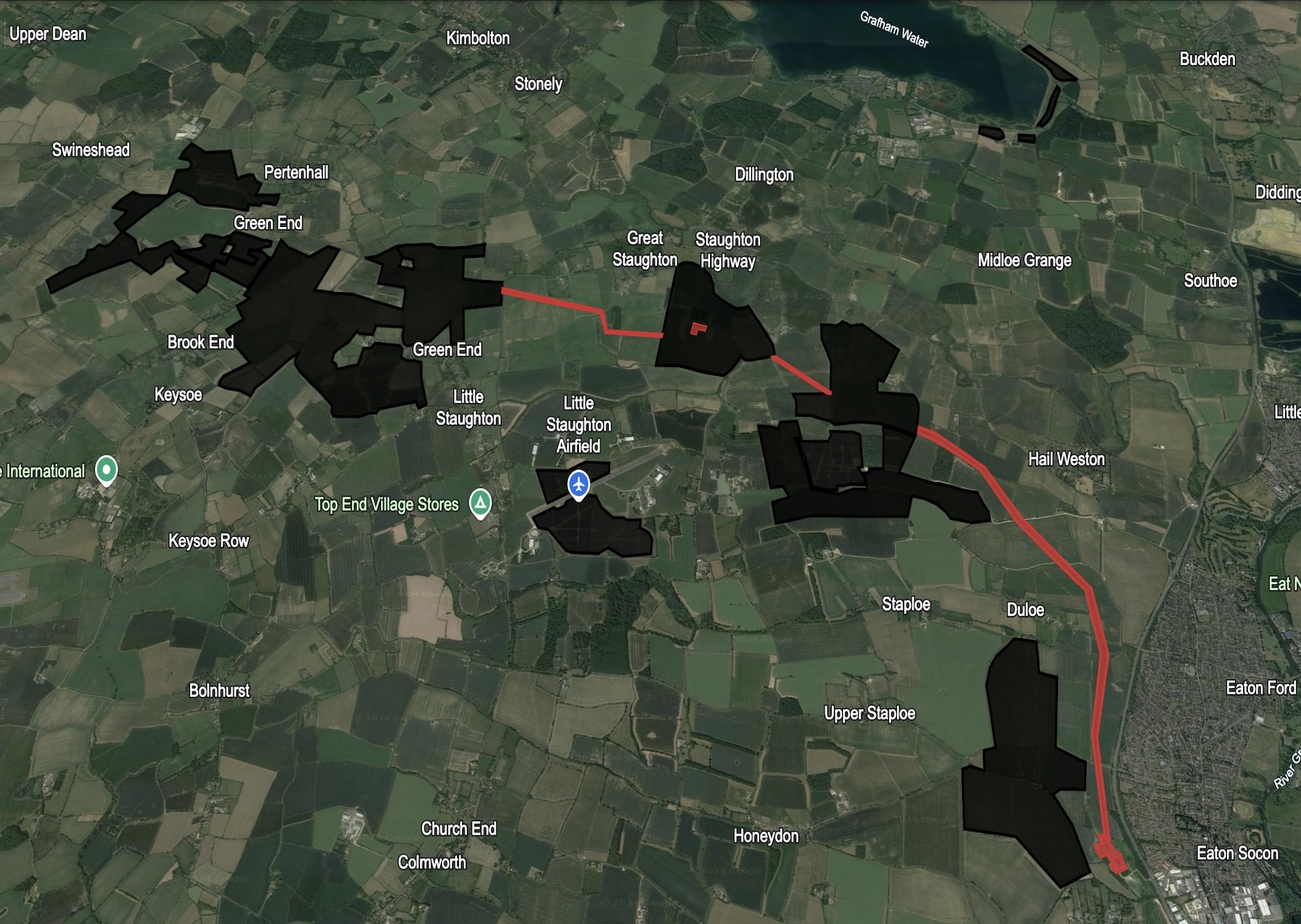
This Google Earth view shows how much land would be covered by solar schemes if the few current solar plants are joined by sites in local planning as well as the East Park super scheme
‘Uncomfortable truths’ being ignored in scramble to install ground-mounted solar
31 August 2024 In the rush to cover productive UK farmland with ground-mounted solar panels, key facts are being overlooked, according to the UK Solar Alliance. The Alliance sets out the realities in its briefing note ‘8 Uncomfortable Truths’, including that:
- The UK has become an outlier within Europe as neighbouring countries use land more intelligently, for example putting more solar panels on industrial and commercial rooftops, creating car park ‘panel canopies’ or running banks of panels down transport corridors. Instead of mandating or incentivising developers to do the same here, the UK is now following a ‘fields first’ route, with several enormous solar scheme plans targeting farmland consented within days of the new Energy Minister taking up his post
- Utility scale solar developers, typically with foreign funding, are likely to benefit from generous energy pricing structures and the potential for arbitrage – either way, consumers will lose out
- The ranks of battery energy storage systems that sit alongside giant solar schemes have well known fire and explosion risks – there have been serious incidents around the world and one already here in a built-up residential area of Liverpool
Read the briefing note here. Stop East Park Energy is a member of the UKSA and contributed to the new briefing.
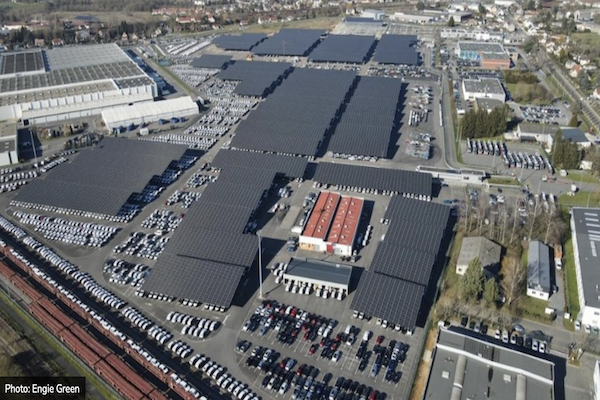
Smarter policies in Europe: solar canopies spanning 37 acres of a car park in France. A new law on renewable energy production mandates that all existing and new car parks with space for at least 80 vehicles must include solar panels. Image: Engie Green
‘What will it take to say no?’ – the UKSA calls on the Energy Secretary to provide clarity on decision-making
25 July 2024 The new Energy Secretary Ed Miliband approved three giant solar power plants just three days after he took office. The three schemes greenlighted by the new Secretary of State were Gate Burton in Lincolnshire, Mallard Pass in Lincolnshire and Rutland, and Sunnica in Cambridgeshire and Suffolk. Mallard Pass has been developed by a company sanctioned by the US government for buying panels built using Chinese slave labour, and the Planning Inspectorate had recommended that the Sunnica scheme should be rejected.
In the wake of Ed Miliband’s decisions, the UK Solar Alliance, the national group representing campaigns including Stop East Park Energy, issued a media release urging the Minister to provide more clarity on his decision-making process regarding nationally significant infrastructure projects in the solar space. It also called on the government to make public the measures being taken to scrutinise the private investors building these solar schemes on British soil.
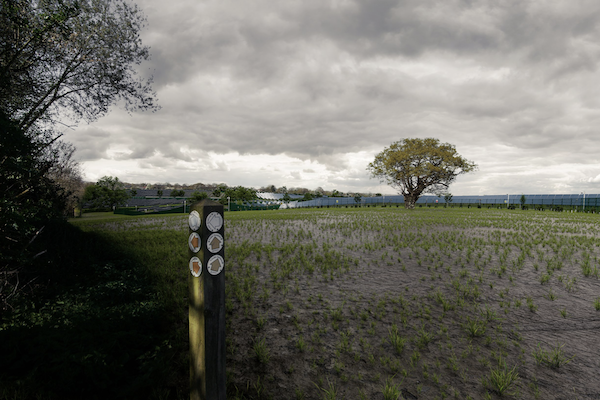
The future of our countryside? Thousands of acres of the UK’s agricultural land are at risk of conversion to solar energy production. CGI courtesy UK Solar Alliance
We call on senior politicians to stop ‘developer-led farmland sunrush’
5 June 2024 Stop East Park Energy is urging senior politicians to “properly plan renewables for the appropriate sites” rather than allowing the current “developer-led farmland sunrush”.
In a letter to both Claire Coutinho, Secretary of State for Energy Security and Net Zero, and her Shadow counterpart, Ed Miliband, we outline why the East Park Energy application should be rejected, and how more appropriate sites should be selected for this type of industrial development.
In our letter we point out that:
“Research by the UCL Energy Institute for CPRE found that installing solar panels on existing buildings and car parks would enjoy near-universal public support and, crucially, contribute 40-50GW of generation by 2035 – well over half of the UK’s target of 70GW.”
Read the full letter here.
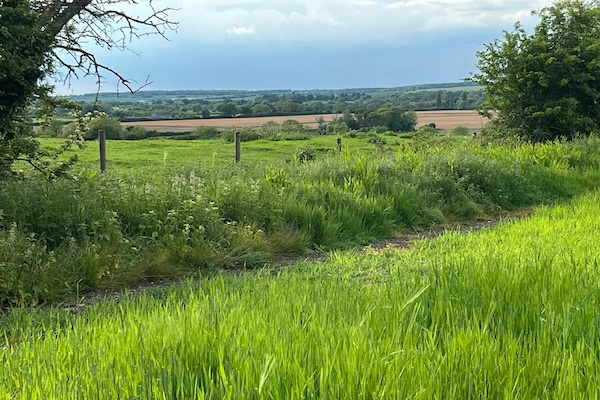
At least 74 per cent of farmland targeted for development by East Park Energy is ‘very good’ or ‘good’ quality Grade 2 or Grade 3a land
‘Massive’ site would impact ‘landscape quality’ – more support for our campaign
22 May 2024 The Cambridgeshire region of CPRE, the countryside charity, has come out in support of our campaign, saying that applications for “massive solar sites” like East Park are often for “inappropriate sites chosen for purely commercial reasons”.
Alan James, Chairman, says:
“CPRE Cambridgeshire and Peterborough supports the Stop East Park Energy campaign. Solar plants are not a one-size-fits-all solution. Many applications, particularly for massive solar sites like this one, are for inappropriate sites chosen for purely commercial reasons. They would undoubtedly affect heritage assets, greenfield land or conservation areas.
As well as the impact on landscape quality, wildlife and biodiversity, we are concerned over the negative impact on our valuable agricultural land – and the lack of effective solutions for recycling the vast number of panels and components when the tech used in these enormous schemes becomes obsolete.”
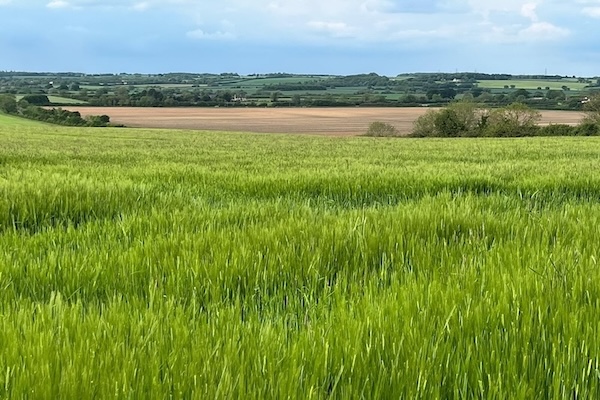
An “inappropriate site”: countryside charity the CPRE on the rolling farmland targeted by East Park Energy
CPRE and local MP back our campaign
27 April 2024 One of our local MPs and CPRE Bedfordshire have formally come out in support of Stop East Park Energy.
Richard Fuller, MP for North East Bedfordshire, is “opposed” to the East Park Energy plant, urging the developer to “drop this proposal”. He says:
“In the pursuit of the good objective of decarbonising our energy production, the East Park Energy proposal for this massively scaled solar power facility across countryside in North Bedfordshire and into Cambridgeshire is a bad idea. The proposal is far too large. The proposal would have a lasting detrimental effect on the prime farmland targeted for development. The proposal seems more about financial speculation than anything else.
Other, smaller scale, solar power facilities are being proposed or already producing power, slowly gaining local public support, and I understand the economic pressures on farmers that make proposals to lease their land attractive: at least for the time being.
I am opposed to East Park Energy and will work with all local residents to encourage the energy plant’s financial backers to drop this proposal or to substantially shrink its scale and rethink its suitability to our area.”
Lois Wright, Director of the Bedfordshire region of CPRE, the countryside charity, also calls out the misplaced solar plan, saying that action against climate change should not be “at the expense of the environment”:
“CPRE Bedfordshire is pleased to support the Stop East Park Energy campaign. We believe solar energy has a role to play in our collective action against climate change, but not at the expense of the environment. We urge the government to fully realise the potential of solar on rooftops and other ‘grey’ spaces where we can roll out renewable energy without harming wildlife, food security and landscapes.”
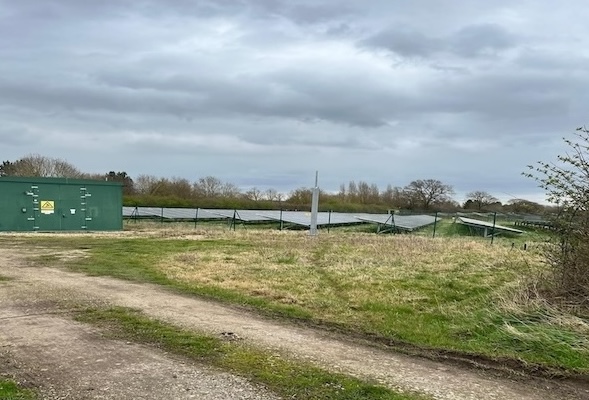
The East Park Energy solar power plant proposal would take hundreds of acres of good grade farmland out of production
Stop East Park Energy to join national solar action group
13 March 2024 The Stop East Park Energy campaign is joining the Solar Campaign Alliance. The Alliance brings together more than 110 community action groups and campaigns across the UK, pushing back against solar power schemes in our countryside totalling an astonishing 66,000-plus acres.
Sixteen of the campaigns are fighting mega sites like the 1,800 acre East Park Energy development. The biggest super scheme is 4,200 acres.
The Alliance says that there are “thousands of applications in the system at various stages” and that it hears news of more new ground-mounted solar plant plans being submitted by developers daily. Dr Catherine Judkins, Solar Campaign Alliance Chair, comments:
“Our message is simple. We all support solar in principle, but we believe that solar panels should be on domestic and commercial rooftops and our good farmland should be left for food production. We believe that if ground-mounted solar is required, it must only be on poor land or brownfield sites – that these sites may prove less profitable for developers, must not be relevant to the planning process.”
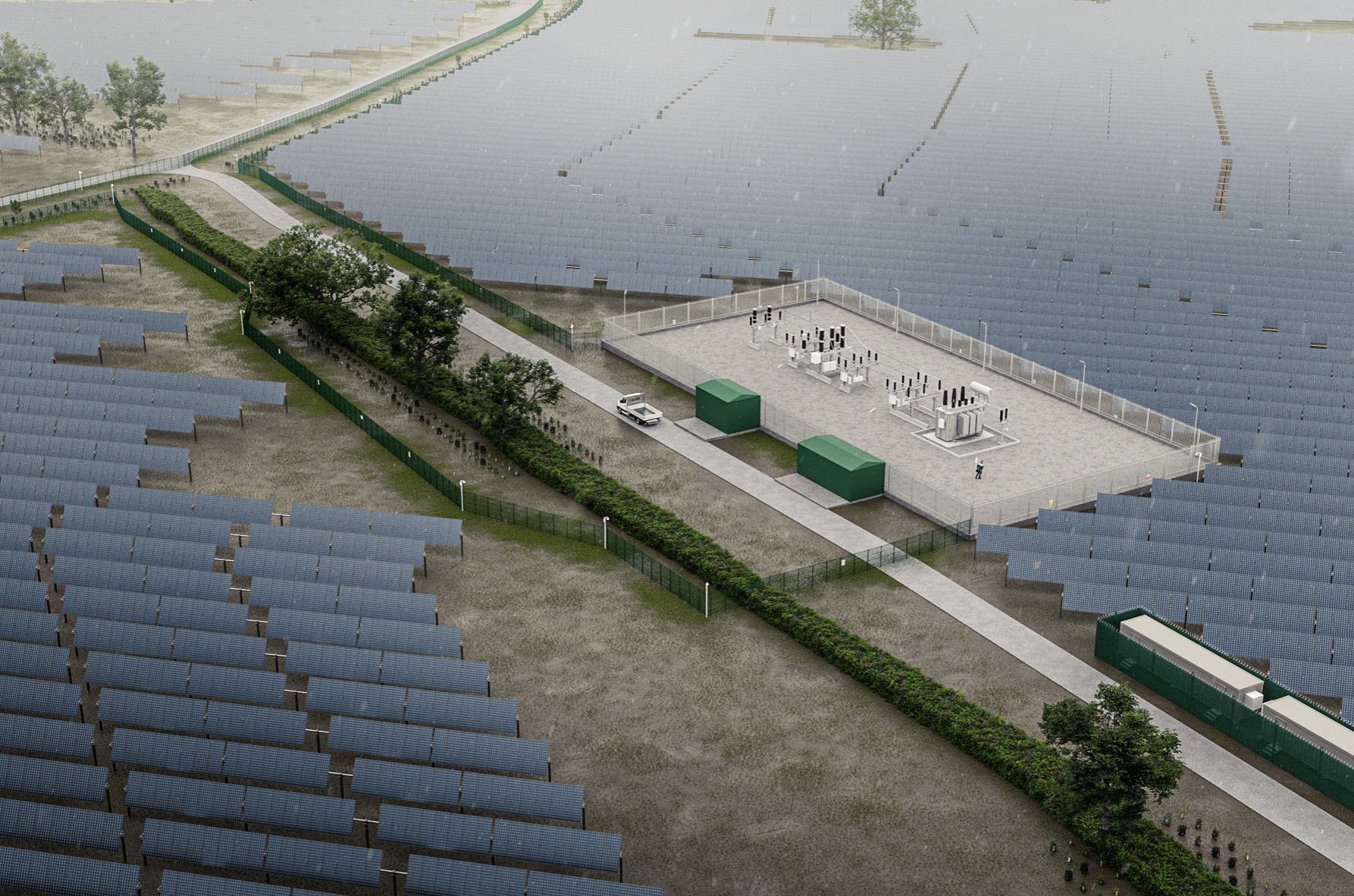
No sheep or wildflowers? The side of solar power the developers don’t show. CGI courtesy Solar Campaign Alliance
 Stop East Park Energy